Dead Tree Removal Geneseo: When to Remove & Safety Risks
A dead tree rarely announces itself. One summer the maple by the driveway leafs out late, the next it doesn’t leaf out at all, and nobody gets around to dealing with it. Then a windy night in March settles the question for you. We work on properties around Geneseo and the rest of Livingston County, and we have seen how that story ends more often than we would like.
The crew at Galbraith Tree & Shrub wrote this guide to help you spot a dying tree early and judge how urgent it is. It also covers when dead tree removal in Geneseo, NY, homeowners can no longer put off is actually due. We will keep it plain. A dead tree is not an emergency every time, but it never gets easier to deal with by waiting.
Why Dead Trees Become a Safety Risk
A living tree bends. Sap keeps the wood flexible, and healthy roots hold it in place against the wind. A dead tree has none of that. The wood dries out, turns brittle, and starts shedding limbs without warning. Fungi and insects move in and break down the structure from the inside while the outside still looks solid.
That is the heart of dead tree risks: the tree can look fine and still fail. Falling limbs are the most common problem. Large ones can crush a roof or a parked car, and they can seriously hurt people. Whole trees come down too, especially after rain when the soil is soft and the roots have rotted.
Ash trees are a good local example. Emerald ash borer has killed ash across Livingston County, and a dead ash turns brittle quickly, which makes it hazardous even for experienced climbers. A dead tree beside a driveway, a play area, or a power line carries far more risk than the same tree at the back of a field.
Warning Signs That a Dead Tree Needs Removal
Start with the leaves. No leaves in summer while the neighbors’ trees are green is a strong clue, though a late spring can fool you, so look again in June. Next, check the bark. Large patches falling off or deep vertical cracks both raise concern.
Try the scratch test on a small twig. If the layer under the bark is brown and dry instead of green and moist, that branch is dead. Look at the base of the trunk for mushrooms or shelf-like growths, since those mean fungus is feeding on the wood.
Small holes and piles of sawdust suggest insects are at work, and D-shaped exit holes on an ash point to emerald ash borer. Dead branches in the upper crown are another sign, along with a trunk that has started to lean when it did not before. Any one of these is worth a closer look. Several together usually mean the tree is past saving.
How to Assess the Risk of a Dead Tree Falling
Risk comes down to two questions. How likely is the tree to fail, and what would it hit? A dead oak in the middle of a ten-acre field is a different problem from a dead oak twenty feet from your bedroom window.
Measure from the trunk to the nearest house, garage, fence, or road, then compare that distance to the tree’s height. If the tree could reach it, that is your target zone. Look for cavities or deep cracks in the trunk, and note any lean. Walk around the base and check for heaved soil or fungal growth, which suggest the roots are decaying. Never climb a dead tree or lean a ladder against one.
Certified arborists use a formal process to rate how serious a problem is, and some hold the ISA Tree Risk Assessment Qualification. If a tree is dead and tall enough to hit anything you care about, that is a case for hazard tree removal, not wait-and-see.
When Should You Remove a Dead Tree?
Sooner is usually better. If the tree is within falling distance of a structure, driveway, walkway, or utility line, schedule removal now and don’t wait for a convenient season. Dead trees at the far edge of a property are lower priority, and some can stay as wildlife habitat, since woodpeckers and other birds use standing dead wood.
That only works where nothing valuable sits in the fall zone. Winter is a good season for dead tree removal that Geneseo, NY homeowners often overlook. Frozen ground holds heavy equipment without tearing up the lawn, and there is no foliage to haul away. But a tree that is leaning, cracking, or dropping large limbs should not wait for a better time of year.
If a tree has already fallen on your house or onto a line, keep everyone clear, call your utility if wires are involved, and then phone a crew. A homeowner’s policy often covers damage once a tree hits the house, but removing a standing tree before it fails is far less likely to be covered, so read your policy.
How Western New York Weather Affects Dead Trees
Our weather is hard on weakened trees. Open farmland and valley ground around Geneseo give wind little to slow it, and a dead tree with no leaves still catches plenty. Heavy wet snow adds weight to limbs that can no longer flex. Ice storms do worse, because a coating of ice can multiply the load on a branch, and brittle wood just snaps.
Spring brings saturated soil, which loosens the grip of rotting roots. Freeze and thaw cycles open cracks in bark and trunks; water gets in, and the next freeze widens the split. Summer thunderstorms can bring sudden gusts that finish off a tree that made it through winter.
Heavy soils in parts of the county stay wet longer, which softens the root zone even more. The practical takeaway is simple. A dead tree that seems stable in October may not last until April, so don’t count on it.
How Professionals Safely Remove Dead Trees
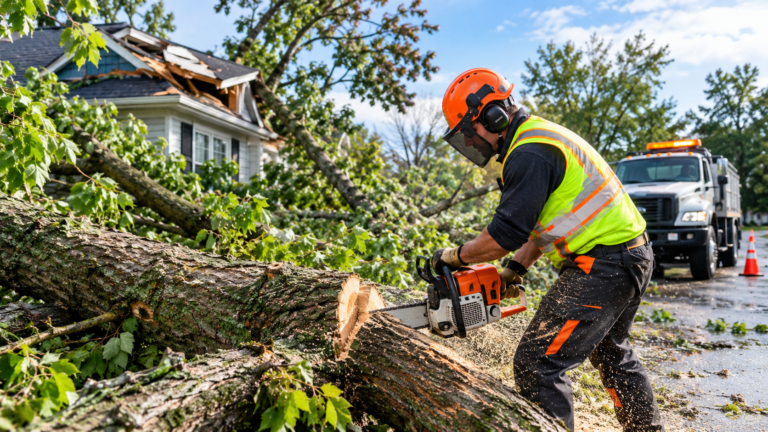
Professional tree removal starts with a plan, not a chainsaw. The crew walks the tree, checks for power lines, looks at what sits under and around it, and picks a method. A dead tree in an open yard can sometimes be felled in one piece. In tight spaces, the crew climbs or uses a bucket truck or crane and takes the tree down in sections, lowering each piece on ropes so nothing lands on your roof.
Dead wood is unpredictable, so good crews test the tree first and rig it to take stress off the weak points. That is why dangerous tree removal Geneseo homeowners face, like a trunk leaning over a house or a tree tangled in wires, belongs to trained people. Safety gear matters: helmets, chaps, climbing systems, and a ground crew that stays out of the drop zone. Reputable companies follow the ANSI Z133 safety standard for tree work.
At Galbraith Tree & Shrub, the crew treats a dead tree as less predictable than a live one, because it is.
Dead Tree Removal Costs in Geneseo, NY
Price is the question everyone asks, and we won’t pretend one number fits every tree. Tree removal services for dead trees are priced by size, access, and risk. A small dead tree in an open yard costs far less than a tall one hanging over a roof, because the second job takes more people, more rigging, and more time.
Nearby power lines, the condition of the wood, whether a crane is needed, and how much cleanup you want all move the price as well. Stump grinding is usually a separate line item. For dead tree removal in Geneseo, NY, jobs of any size, get at least two written estimates, and make sure each one says what is included, such as hauling away logs and brush. Be wary of a quote that comes in far below the rest, since a low price often means no insurance or skipped safety steps.
Ask for proof of liability insurance and workers’ compensation coverage before anyone starts, because an uninsured crew can leave you exposed if someone gets hurt on your property. It also helps to ask the Village of Geneseo or your town office whether any tree rules apply, especially near the street.
What Happens After the Tree Is Removed?
Once the tree is down, you have choices. The stump can be ground below the surface, which clears the spot for lawn or a new tree. Call 811 before any grinding or digging so underground lines get marked.
Logs can be cut for firewood, but use it close to where it was cut, since New York limits moving untreated firewood more than 50 miles to slow the spread of pests like emerald ash borer. Wood chips make good mulch for beds, though they should stay a few inches back from the trunks of living plants. When the area settles, think about replanting. Native trees such as sugar maple or red oak do well in this region, and mixing species keeps one pest from taking out everything.
Choose a spot away from lines and buildings, and plan for the size the tree will reach at maturity. If you are not sure whether a tree is dead or just dormant, the crew at Galbraith Tree & Shrub can look at it and tell you straight.
Frequently Asked Questions
How do I know if a tree is dead or just dormant?
Scratch a small twig with your thumbnail. Green, moist tissue underneath means the branch is alive. Brown and dry means it is dead. Check several branches, and wait until June if you are unsure, since some trees leaf out late.
How long can a dead tree stand before it falls?
There is no safe timeline. Some stand for years and others fail in the first storm. Species, size, and root condition all matter. Ash becomes brittle quickly, so a dead ash should not be left standing near buildings.
Does homeowners insurance cover dead tree removal?
Often only when a tree falls and damages your home or another covered structure, removing a standing dead tree beforehand is usually not covered. Policies differ, so read yours or call your agent before work begins.
Can I remove a dead tree myself?
A small dead tree with open space around it may be manageable for an experienced person with proper gear. Anything tall, leaning, or near a structure or wires should go to professionals. Dead wood breaks unpredictably, and mistakes can be serious.
How much does dead tree removal cost in Geneseo?
It depends on height, access, and risk. A small tree in an open yard costs much less than a large one over a house. Get two or more written estimates that list exactly what is included, including cleanup.
Do I need a permit to remove a dead tree?
Rules vary. Many properties need none, but villages and towns sometimes regulate trees along streets or in protected areas. Call the Village of Geneseo or your town office before work begins, especially for trees near the road.
What should I do if a dead tree falls on my house?
Get everyone out of the area first. Stay away from downed wires, and call your utility, plus 911 if someone is hurt. Then take photos of the damage, call your insurer, and hire a crew to remove the tree.
Keep Reading
More from the blog
Practical guidance on looking after the trees on your property.
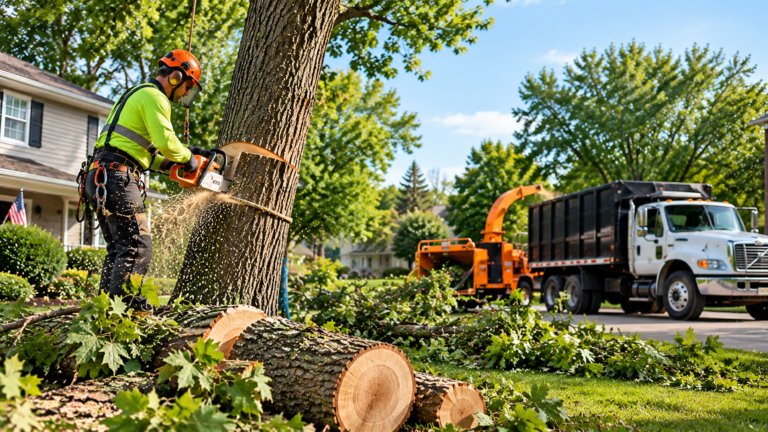
Affordable Tree Removal Near Me: Budget Options Without Compromising Safety
When a tree becomes damaged, diseased, unstable, or simply outgrows its space, removing it may be necessary to protect your property. However,…
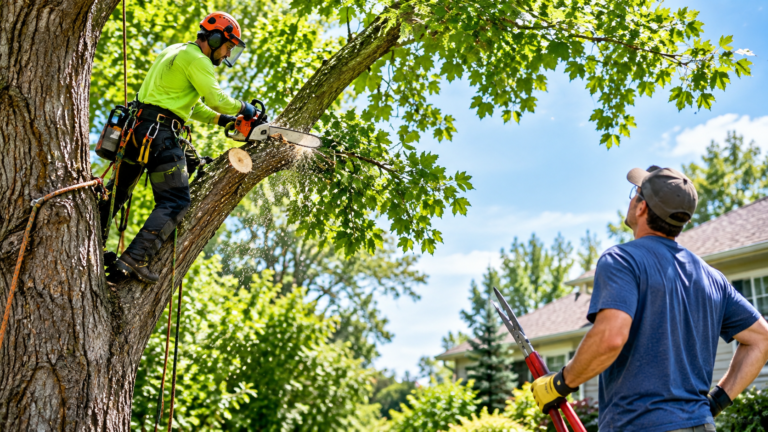
Tree Trimming Company Guide: Certified Arborists vs DIY (Why It Matters)
A branch hangs over your roof, and you wonder if you can handle it yourself. Maybe you can. Plenty of trimming is…
Emergency Tree Service: How Fast Response Saves Lives & Property
What to Do When a Tree Comes Down in Geneseo A tree doesn’t pick a good time to fall. It happens at…