
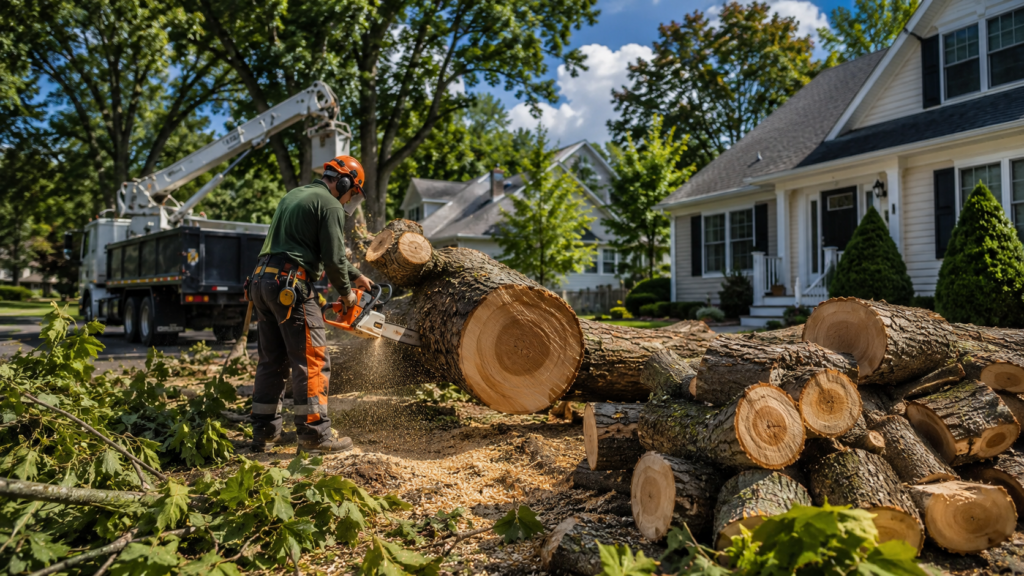
Tree Removal Cost in 2026: Everything Homeowners Need to Know
Tree removal in 2025 typically costs anywhere from $150 to more than $5,000, depending on the tree’s size, condition, location, and accessibility.
If you’ve got a tree leaning the wrong way over your driveway, or a dead oak that’s been dropping branches all spring, you’re probably staring down the same question every homeowner does. The cost of tree removal isn’t a number you can pull from a chart. It depends on the tree, the spot it’s in, and what it’ll take to get it down safely.
After years of climbing into trees in Geneseo backyards, we can tell you the honest range, what moves the price, and how to spot a quote that’s hiding something.
Factors That Affect Tree Removal Pricing
Every tree job is different. A crew has to factor in height, trunk diameter, how close the tree sits to a house or power line, whether there’s a fence in the way, and how the wood needs to be hauled out. Slope matters too. A tree on a flat, open lot comes down faster than one wedged on a hillside behind a shed. Access is the real wildcard.
If a crew can drive a truck and chipper right up to the trunk, the job moves quickly. If they have to hand-carry every limb through a side gate, that adds hours, and hours add dollars. Tree condition plays a role as well, since a dead or rotted tree often takes more care, not less, because the wood can be unpredictable.
Storm-damaged trees, leaning trees, and trees tangled in utility lines all push the price up for the same reason: risk. The riskier the climb, the more it costs to do it right.
Cost by Tree Size: Small, Medium, Large, Extra-Large
Size is the biggest single factor in tree removal cost, so it’s worth breaking it down. These are general ranges based on typical residential jobs, not quotes, since your actual price will depend on the specifics above.
Small trees, under 30 feet, usually run on the lower end of the scale. Think ornamental trees or young maples. While some smaller trees can be handled by homeowners, any tree near structures or power lines should be left to professionals. Medium trees, 30 to 60 feet, cost more because they need bigger equipment and more rigging.
Large trees, 60 to 80 feet, are where things get serious. Oaks, mature pines, and big sugar maples fall into this group, and they often require a crane or specialized rigging to bring sections down safely. Extra-large trees, anything over 80 feet, sit at the top of the range.
These jobs can take a full crew most of a day, sometimes longer if the tree is wrapped around a structure. A homeowner comparing tree removal company pricing should always ask which size bracket their tree falls into, because that one detail explains most of the gap between quotes.
Quick Recap Table:
Tree Size | Height | Typical cost | What drives cost |
Small | Under 30 ft | $150 – $500 | Ornamental trees, young maples, shrubs. Crew access usually easy. Lower risk, faster removal |
Medium | 30–60 ft | $500 – $1,200 | Mature ornamentals, mid-size oaks and pines. Requires larger equipment and more rigging time. |
Large | 60–80 ft | $1,200 – $2,000 | Big sugar maples, mature oaks, large pines. May need a crane or specialized rigging. Half-day job typical. |
Extra Large | 80+ ft | $2,000 – $5,000+ | Full-crew, full-day jobs. Scope climbs fast if a tree wraps a structure or sits near power lines. |
Hidden Fees to Watch Out For
This is where a lot of homeowners get burned. A quote that looks cheap on paper can balloon once the crew shows up, and by then you’re not really in a position to negotiate. Stump grinding is the most common add-on, since plenty of companies quote the removal and leave the stump as a separate line item.
Hauling and disposal fees catch people off guard, too. Someone has to pay to truck that wood away, and if it’s not in the original number, it shows up later.
Travel charges for jobs outside a company’s normal service area are another one to watch, along with emergency or after-hours rates if a storm just took a tree down across your driveway.
Permit fees, in towns that require them, sometimes get passed straight to the homeowner, too. None of these are necessarily shady, but they should be spelled out before a crew touches a chainsaw, not discovered on the invoice.
Why Cheap Quotes Can Cost You More Long-Term
Everybody wants cheap tree removal Geneseo homeowners can trust, and that’s fair. Money’s tight, and a tree job isn’t exactly fun to spend it on. But the lowest bid isn’t always the cheapest option once you add up what comes after.
A crew without proper insurance can leave you on the hook if a limb crushes a fence or a worker gets hurt on your property. That’s not a hypothetical; it happens more than people think.
Underbid jobs also tend to cut corners on cleanup, leaving brush piles, wood debris, or gouged-up lawns behind. Some crews rush the cut itself, which can damage nearby plants, sidewalks, or even the foundation if a section drops incorrectly.
And if a tree comes down half-finished because the crew underestimated the job, you’re left calling someone else to fix what’s left, which usually costs more than doing it right the first time. A fair price reflects insurance, trained climbers, proper equipment, and a cleanup that actually finishes the job.
Getting an Accurate Estimate from Galbraith
There’s a simple way to avoid most of the headaches above: get a real look at the tree before anyone quotes a number. Galbraith Tree & Shrub sends someone out to walk the property, check the tree’s condition, measure the access, and talk through what the job actually involves.
That’s not a sales pitch; it’s just how you get a number that holds up once the work starts. We offer a free tree removal estimate for Geneseo and Livingston County homeowners, and we write it up clearly, with stump grinding and hauling listed separately so you know exactly what you’re paying for.
If you’re searching for affordable tree removal near me, the best move isn’t picking the first number you see. It’s getting two or three estimates from companies that actually show up in person, and comparing what each one includes, not just the total.
A written estimate with ISA-certified arborists behind it tends to hold up a lot better than a number texted over from a truck window.
Do You Need a Permit for Tree Removal in NY?
It depends on where you live. New York doesn’t have a single statewide rule for residential tree removal, so permit requirements come down to your local town or village code.
In Geneseo and most of Livingston County, removing a tree on your own residential property usually doesn’t require a permit, but there are exceptions worth checking. Trees near a wetland, within a protected setback, or tangled in a utility easement can fall under different rules entirely.
Commercial properties and larger developments tend to face stricter requirements than a single-family lot. If you’re not sure, a quick call to the Town of Geneseo building or code office will clear it up faster than guessing. A reputable crew should also know the local rules and flag anything that might need a permit before they start work, not after.
Seasonal Pricing: Is There a Cheaper Time of Year?
Yes, generally. Late fall through winter tends to bring lower demand for tree removal services, since most homeowners aren’t thinking about trees once the leaves are down and the snow starts.
Crews have more open schedule slots, which sometimes translates into better pricing or at least faster availability. Bare branches also make it easier to see a tree’s structure, which can make certain jobs more straightforward.
Spring and summer are busier, especially right after storm season, when everyone seems to need a tree down at the same time. That demand can push prices up and stretch out scheduling, sometimes by weeks.
If your tree isn’t an emergency, planning the work for winter can save some money and get you on the calendar quicker. If it’s leaning over your roof after a storm, though, don’t wait for a cheaper season. Some risks aren’t worth saving a few dollars on.
The Bottom Line
Tree removal isn’t cheap, and it shouldn’t be, because doing it safely takes training, the right equipment, and real insurance behind the crew. What you can control is how informed you are when walking into it.
Ask what’s included, ask about the size bracket your tree falls into, and get a written estimate before anyone fires up a chainsaw. Galbraith Tree & Shrub has been walking Geneseo properties and giving straight answers for years, and that’s still the simplest way to get a number you can actually trust.
Frequently Asked Questions
How much does tree removal cost on average in Geneseo, NY?
Most residential tree removals in Geneseo range from about $150 for a small ornamental tree to $5,000 or more for very large trees near structures or power lines. Accessibility, tree condition, and equipment needs all affect the final price.
Is stump grinding included in the tree removal price?
Not usually. Stump grinding is typically quoted as a separate line item, so always ask whether it’s included before comparing estimates. A clear quote will list it on its own, not buried in one lump total.
Can I remove a tree myself to save money?
You can do small trees away from structures, but anything tall, leaning, or near power lines should go to a professional. The risk of property damage or injury usually outweighs what you’d save by doing it yourself.
How long does a typical tree removal take?
Small to medium trees often take a few hours, while large or extra-large trees with tricky access can take most of a day. Storm-damaged or tangled trees sometimes need extra time for safety planning before cutting starts.
Will my homeowner’s insurance cover tree removal?
Sometimes, particularly if the tree fell due to storm damage or hit a structure. Routine removal of a healthy or dying tree usually isn’t covered, so it’s worth calling your insurance agent before assuming either way.
What’s the difference between tree removal and tree trimming?
Removal takes the whole tree down, roots and all, while trimming shapes or reduces the canopy without removing the tree. Trimming costs less and is often a better option for trees that are healthy but overgrown or blocking a view.
Do I need to be home during the tree removal?
It helps but isn’t always required, especially for straightforward jobs with clear access. For anything near a house, fence, or shared property line, being available to answer questions can prevent misunderstandings during the work.
Most residential tree removals in Geneseo range from about $150 for a small ornamental tree to $5,000 or more for very large trees near structures or power lines. Accessibility, tree condition, and equipment needs all affect the final price.
Not usually. Stump grinding is typically quoted as a separate line item, so always ask whether it’s included before comparing estimates. A clear quote will list it on its own, not buried in one lump total.
You can do small trees away from structures, but anything tall, leaning, or near power lines should go to a professional. The risk of property damage or injury usually outweighs what you’d save by doing it yourself.
Small to medium trees often take a few hours, while large or extra-large trees with tricky access can take most of a day. Storm-damaged or tangled trees sometimes need extra time for safety planning before cutting starts.
Sometimes, particularly if the tree fell due to storm damage or hit a structure. Routine removal of a healthy or dying tree usually isn’t covered, so it’s worth calling your insurance agent before assuming either way.
Removal takes the whole tree down, roots and all, while trimming shapes or reduces the canopy without removing the tree. Trimming costs less and is often a better option for trees that are healthy but overgrown or blocking a view.
It helps but isn’t always required, especially for straightforward jobs with clear access. For anything near a house, fence, or shared property line, being available to answer questions can prevent misunderstandings during the work.
Keep Reading
More from the blog
Practical guidance on looking after the trees on your property.
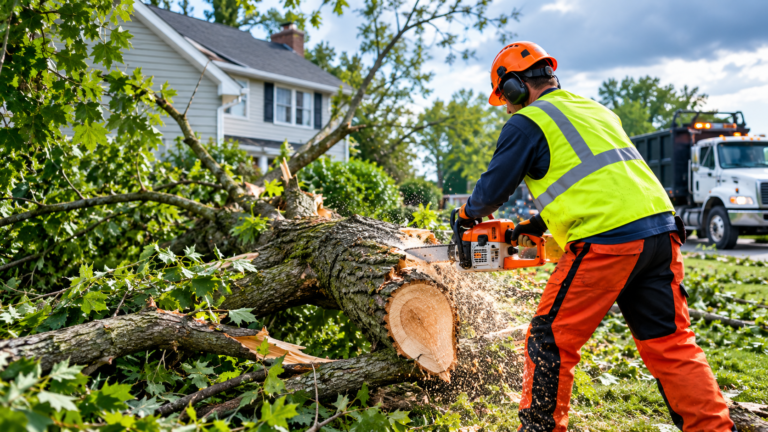
Emergency Tree Removal: What to Do Right Now (Action Guide)
A tree doesn’t ask permission before it comes down. One minute it’s just another maple in the yard, and the next it’s…
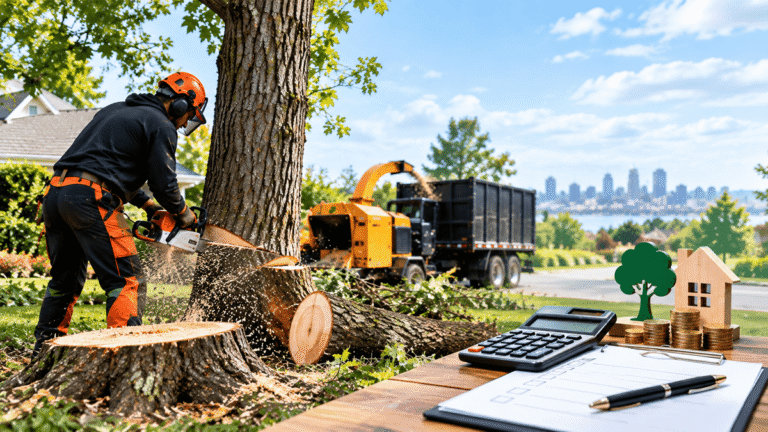
Tree Removal Cost Guide 2026: What You’ll Actually Pay
Every fall, we get the same call. A homeowner in South Buffalo or Amherst looks at a leaning silver maple and asks,…
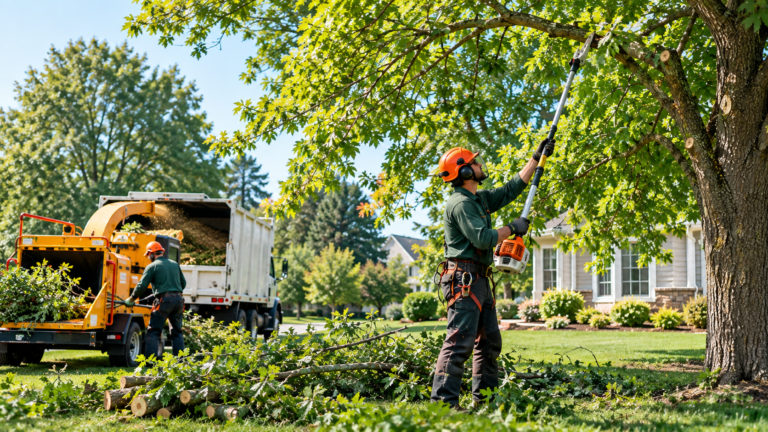
Affordable Tree Service in Geneseo, NY: Quality Care That Fits Your Budget
Twenty-some years of cutting, climbing, and grinding stumps in this county, and I still hear the same question first. “What’s this going…