Tree Trimming Company Guide: Certified Arborists vs DIY (Why It Matters)
A branch hangs over your roof, and you wonder if you can handle it yourself. Maybe you can. Plenty of trimming is fine to do on a Saturday with the right tools. Some of it should never be done by a homeowner on a ladder, and the hard part is knowing which is which.
We work on trees around Geneseo and across Livingston County, and the same questions come up every season. Should I hire a tree trimming company or do this myself? Does it matter if the person with the saw is a certified arborist? This guide answers both in plain terms, based on what we see in local yards.
At Galbraith Tree & Shrub, we would rather you make a good call on your own than hire us for a job you could safely handle.
What Does a Tree Trimming Company Do?
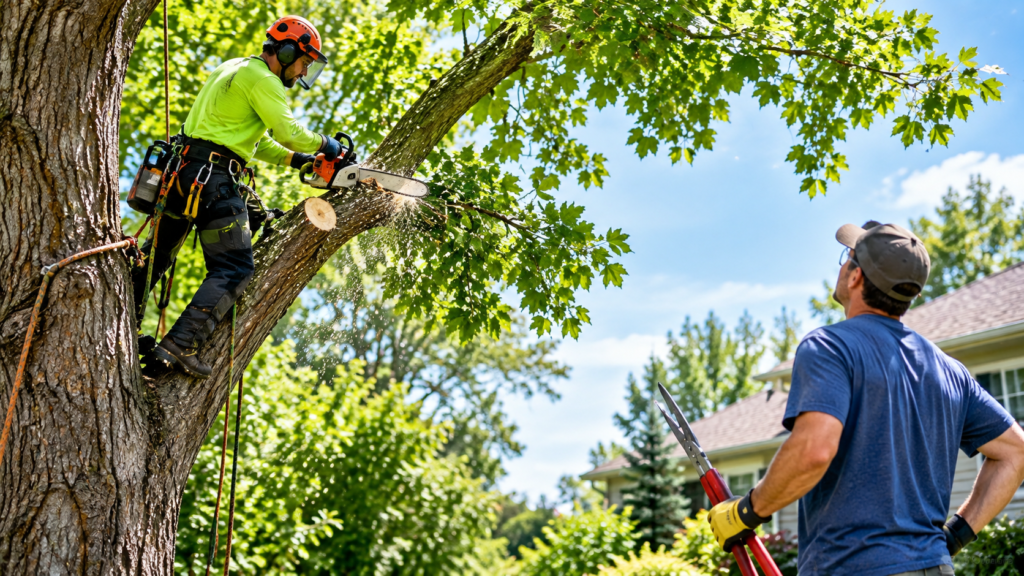
A tree trimming company cuts, shapes, and cleans up trees so they stay healthy and safe around your property. That covers more than most people expect. Crews take out dead or broken limbs, thin crowded branches so light and air get through, lift the canopy off a roof or driveway, and pull growth back from wires and buildings.
They also inspect the tree while they are up in it, which is half the value. A person on the ground sees leaves. Someone in the canopy sees the cracks, the soft decayed spots, the fungus at a branch union, and the old wound that never closed.
Good tree maintenance services run on a schedule instead of waiting for a storm. Around Geneseo, that matters. Lake-effect snow and heavy spring ice load up branches, and a limb with a hidden weak spot usually lets go during the worst weather, when nobody can get a crew to you quickly.
Regular trimming finds those weak spots sooner. Most mature maples and oaks in this area do well with a professional look every few years.
What Tree Trimming Can You Safely Do Yourself?
Some jobs belong to the homeowner. If you can stand on the ground, reach the branch, and cut it with hand pruners, loppers, or a pole saw, you are in safe territory. Young trees and shrubs are the best place to start, because a tree you shape early rarely needs big cuts later.
Dead twigs and small broken branches under about two inches thick are reasonable DIY work. So are suckers growing from the base of the trunk. Use sharp, clean tools. Dull blades crush bark and leave ragged edges that heal slowly.
Cut just outside the branch collar, the slightly swollen ring where a branch meets the trunk or a larger limb. Do not cut flush with the trunk, and do not leave a long stub behind. Wear eye protection and gloves, and look overhead before each cut so nothing lands on you.
Keep your feet on the ground. If the job needs a ladder, it has already crossed the line for most people.
When DIY Tree Trimming Becomes a Bad Idea
Trouble starts when the job gets bigger than the person doing it. Power lines are the first red flag. Treat every wire as live, stay well back, and call your utility company instead of pruning near it. A branch touching a line can carry current to whoever is holding the saw.
Ladders and chainsaws are the next problem. A chainsaw is hard enough to control with both feet planted. Run one overhead from a ladder, and a small slip can turn into a hospital visit. Falls from ladders are among the most common injuries in home projects, and adding a running saw makes the odds worse.
Weight is the other piece people underestimate. A limb weighs far more than it looks, and when it drops, it can swing, pinch the saw, or take out your fence on the way down. Crews use ropes and pulleys to lower big limbs in controlled pieces. Most homeowners do not own that gear.
Then there are the trees that look wrong. Mushrooms at the base, cracks in the trunk, large dead sections in the crown, or a lean that changed after a storm all deserve a trained eye before anyone cuts. Some of those trees need trimming, and some need to come down. You cannot always tell from the ground.
Certified Arborist vs Tree Trimmer: What’s the Difference?
People use these words as if they mean the same thing. They do not. New York has no statewide license for tree work, although some towns and villages require their own permits or registrations. So anyone with a truck and a saw can print “tree trimmer” on a business card.
A certified arborist has earned a credential through the International Society of Arboriculture, or ISA. To sit for the exam, a person needs several years of hands-on experience in tree care, or a mix of education and experience. Then they have to pass a test on tree biology, soil, pruning, safety, and diagnosing problems. To keep the credential, they must complete continuing education.
That does not make every trimmer without a certificate a bad one. Plenty of skilled climbers learned on the job. It also does not mean a certificate guarantees good work. What it tells you is that someone was tested on how trees function, not only on how to cut them.
If you want an expert arborist in Geneseo, NY, ask who will actually be on your property and whether that person holds an ISA certification. You can verify it yourself on the ISA website, which lets you search for certified arborists by name. Also ask whether the crew follows ANSI A300, the national pruning standards. A real answer is short and specific.
Why Professional Tree Trimming Matters for Tree Health
Trees do not heal the way people do. They wall off a wound and keep the damaged wood inside for good. That means every cut stays with the tree for life, so where you make it matters.
A well-placed cut lets the tree seal over cleanly. A poor one leaves an opening for decay and insects. Professional tree trimming is mostly about making fewer cuts and making each one count.
Timing matters too. Late winter, while trees are dormant, works well for many species. You can see the branch structure without leaves, and it is easier on the tree. Sugar maples may drip sap in late winter, which looks alarming but does not hurt them. Oaks are different. Many arborists avoid pruning oaks in spring and early summer to lower the risk of oak wilt, since beetles can carry the fungus to fresh wounds.
Health problems also show up during a proper trim. Emerald ash borer has hit ash trees across Western New York, and an arborist can spot the thinning crown and woodpecker damage that give it away. Catching it early gives you more options, and sometimes the better option is treatment rather than removal.
DIY vs Professional : Cost, Risk & Results
DIY looks cheaper on paper. You skip the labor charge. Then you add up a quality pole saw, a ladder, safety gear, maybe a chainsaw, and a way to haul off the brush. Those costs add up quickly if you only trim once every few years.
The higher cost is what happens when something goes wrong. A dropped limb can crack a roof edge, bend a gutter, or dent a car. A bad cut can shorten a tree’s life by years. Ask your insurance agent how your homeowners policy treats a tree-work injury or damage before you start, because answers vary from policy to policy.
A professional crew brings insurance, training, and equipment built for the job. Ask to see the certificate of insurance. A reputable company will hand it over without fuss. If a worker is hurt on your property and the company carries no coverage, that can become your problem.
Results differ as well. Homeowners tend to cut what is easy to reach. Professionals cut what the tree needs. Those are often two different branches.
How Improper Trimming Can Damage Your Tree
The most common mistake in this area is topping, which means cutting the main limbs back to stubs. People do it to make a tree smaller. It backfires. The tree responds with a flush of weak, fast-growing shoots that attach poorly and break easily, and the stubs often rot. A topped tree usually ends up more dangerous than before.
Flush cuts are another one. Slicing a branch off against the trunk removes the collar the tree uses to close the wound. Stub cuts leave the opposite problem, a dead length of wood that invites decay.
Removing too much at once also hurts. A common guideline is to keep live canopy removal under about a quarter in a single year, and less for older or stressed trees. Leaves make the tree’s food, so stripping them out starves it.
Over-thinning the inside of the crown and leaving tufts at the branch ends, sometimes called lion-tailing, puts extra strain on the outer limbs and makes them more likely to break in wind.
One more thing. Wound paint and sealers are not needed in most cases, and they can trap moisture against the cut. Skip them.
How to Choose the Right Tree Trimming Company
Start local. A company that works in your area knows the species, the soil, and the weather that stresses trees here. Look for a real address and a phone number that gets answered. Check the company’s Google Business Profile, and pay attention to what reviewers actually describe. A review that mentions the specific job, the crew, and the cleanup tells you more than a string of stars.
Photos of finished work help too, especially ones that show cuts at the branch collar instead of stubs. Ask neighbors who they use. In a town the size of Geneseo, word travels, and you can usually find someone who has dealt with the company you are considering.
Be careful after storms. Crews who knock on doors right after a bad weather event are not always local or insured. Take a day if you can, and get a written estimate that says what will be cut and what will be hauled away.
When you call Galbraith Tree & Shrub or anyone else, compare what you hear against the same list. A good tree trimming company will explain its plan without pressure. If someone suggests topping your tree as the first idea, thank them and move on.
Questions to Ask Before Hiring a Tree Trimming Company
Keep the questions short and direct. Who will be on site, and does that person hold an ISA certification? Can I see proof of liability insurance and workers’ compensation? What exactly will you cut, and roughly how much of the canopy will come off?
Ask whether they top trees, and listen closely to the answer. Ask whether cleanup and haul-away are in the price, and whether the estimate is in writing. If your property is in a village, ask whether a permit is needed for the work, since rules vary from one municipality to the next.
Finally, ask how they would handle a problem. Maybe a limb damages something, or the tree turns out to be weaker than it looked. The way someone answers that tells you how they work when things do not go to plan.
Frequently Asked Questions
How often should trees be trimmed?
Most mature trees do well with a professional check every three to five years. Young trees often need light shaping sooner. Fast-growing species, trees near buildings, and trees that have taken storm damage may need attention more often.
When is the best time to trim trees in Geneseo?
Late winter, while trees are dormant, works for many species. You can see the branch structure clearly. Dead or hazardous limbs can come out any time of year. Oaks are usually left alone in spring and early summer.
Do I need a certified arborist, or is a regular trimmer enough?
For small, routine cuts, a skilled trimmer can do fine work. For large trees, sick trees, or anything near your home, a certified arborist adds tested knowledge of tree health. Ask about experience and insurance either way.
How much of a tree can be trimmed at once?
A common guideline is to remove no more than about 25 percent of the live canopy in one year. Older or stressed trees should lose less. Taking too much starves the tree of leaves and weakens it.
Is tree topping a good idea ever?
Almost never. Topping leaves large wounds and triggers weak, fast-growing shoots that break easily. If a tree is too big for its spot, a better option is careful reduction cuts by a qualified arborist, or removal.
Does homeowners insurance cover tree trimming accidents?
It depends on your policy. Some cover damage to your own property, and injuries may be treated differently. Call your agent before you start. If you hire a company, ask for proof of liability and workers’ compensation coverage.
How can I tell if a tree trimming company is legitimate?
Look for a local address, a working phone number, real reviews that describe specific jobs, and a written estimate. Ask for the insurance certificate and any ISA certification. Be cautious of anyone who pushes you to decide on the spot.
Keep Reading
More from the blog
Practical guidance on looking after the trees on your property.
Dead Tree Removal Geneseo: When to Remove & Safety Risks
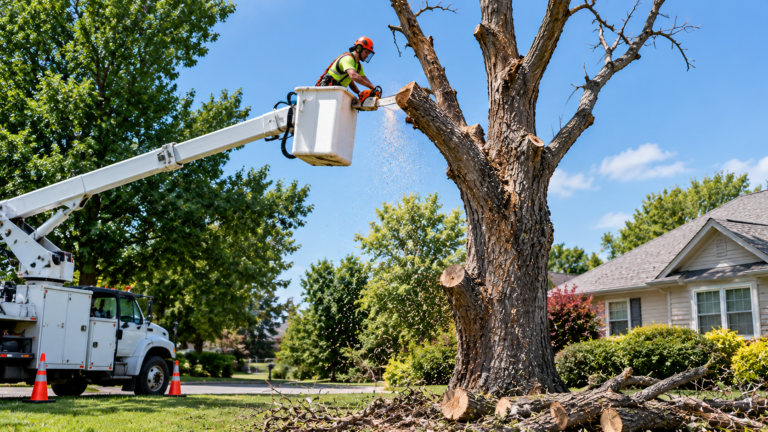
A dead tree rarely announces itself. One summer the maple by the driveway leafs out late, the next it doesn’t leaf out…
Affordable Tree Removal Near Me: Budget Options Without Compromising Safety
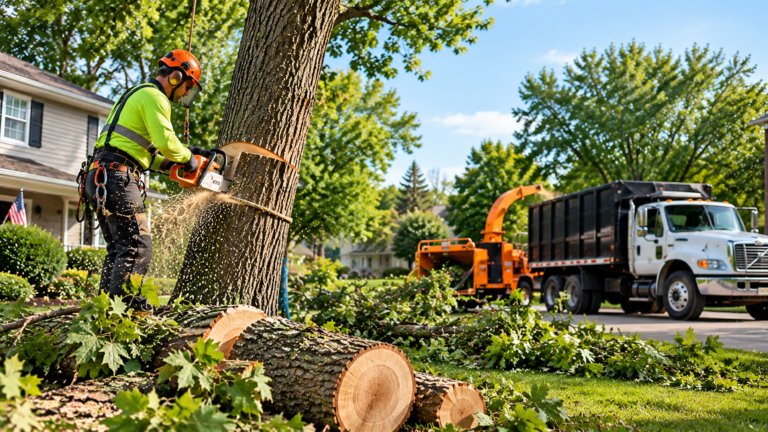
When a tree becomes damaged, diseased, unstable, or simply outgrows its space, removing it may be necessary to protect your property. However,…
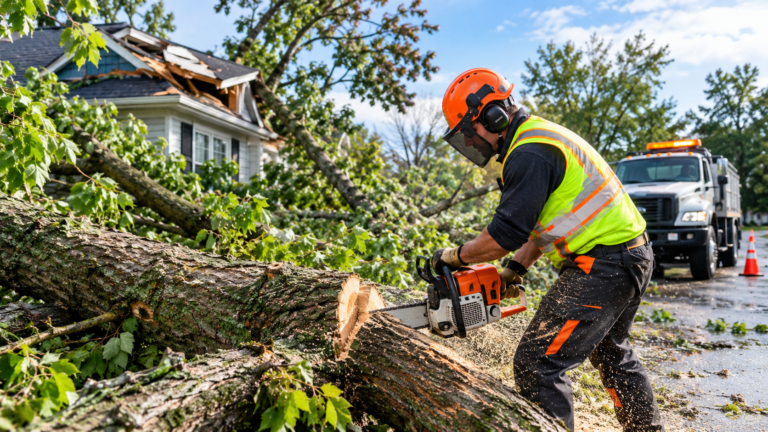
Emergency Tree Service: How Fast Response Saves Lives & Property
What to Do When a Tree Comes Down in Geneseo A tree doesn’t pick a good time to fall. It happens at…