
Emergency Tree Service: Why Speed and Expertise Both Matter
A tree doesn’t wait for business hours.
It comes down at 2 a.m. in an ice storm, or it cracks halfway through during a windstorm and hangs there, threatening to finish the job on its own schedule. When that happens, the homeowner needs two things at once, and most companies can only deliver one.
Speed without skill makes a mess worse. Skill without speed leaves a hazard sitting on a roof for two days. You need both, and that’s the whole idea behind real emergency tree service.
This guide covers what actually counts as an emergency, what happens when you call, and why the gap between fast and careless matters more than people realize.
What Counts as a Tree Service Emergency?
Not every leaning branch needs a 2 a.m. phone call.
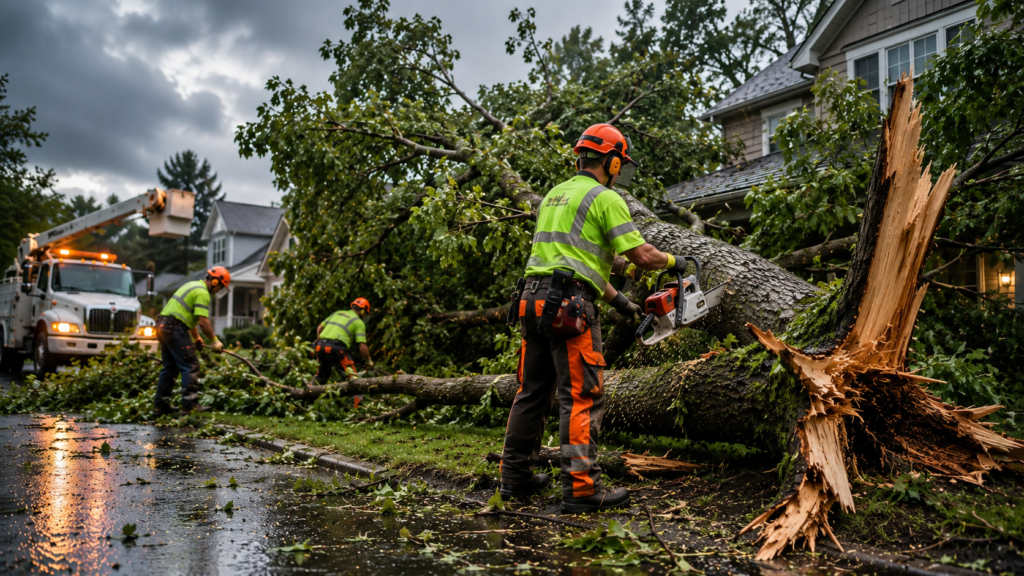
A tree resting on a roof, a trunk split and hanging over a driveway, branches tangled in power lines, a tree blocking the only road in or out of a property, root systems heaved up after a storm with the tree still partly standing. These situations share one thing: waiting makes them worse, not better. A cracked limb today is a fallen limb tomorrow, and it might land on a car instead of grass.
In our corner of Western NY, this often involves the giant Sugar Maples, mature White Oaks, and ancient Pines that define historic Geneseo yards and lakeside properties. When these massive canopies catch heavy ice or high winds, their sheer weight makes immediate intervention critical.
If you’re not sure whether your situation qualifies, call anyway. A real emergency tree service near me search shouldn’t end with you guessing alone in the dark.
The Risk of Delayed Response to Fallen Trees
Here’s what a lot of homeowners don’t think about until it’s too late.
A fallen tree isn’t a static object once it’s down. Weight shifts as branches settle, ice adds load overnight, wind keeps pushing on whatever’s still upright, and a tree leaning on a structure can keep sinking into that structure hour by hour.
The damage from hour one to hour twelve isn’t the same as the damage. It compounds. Insurance adjusters see this constantly: a homeowner waits two days for “the cheapest quote,” and the roof damage triples in that window.
This is especially true during our brutal Genesee Valley winters. A tree that rests stably on a roof at 4:00 p.m. can become a catastrophic weight hazard by midnight if a heavy layer of lake-effect ice or wet snow builds up on the remaining branches.
Storm tree damage response isn’t just about getting the tree off your property. It’s about stopping a small problem from becoming a much bigger one while you wait.
How Our Dispatch System Works 24/7
Galbraith Tree & Shrub runs a dispatch line that’s actually staffed around the clock, not a voicemail that gets checked in the morning.
When you call, a real person asks a short set of questions: what’s down, what it’s touching, whether anyone’s in danger, whether power lines are involved. That information routes the right crew with the right equipment, instead of sending out a single guy to a job that needs a bucket truck and three people.
During major storms, multiple crews run staggered shifts so the queue doesn’t back up for two or three days as it does with smaller outfits.
Because our team lives and works right here, we don’t waste precious time looking up rural routes or navigating the tricky seasonal roads around Conesus Lake, Avon, Livonia, or Mt. Morris. We know the fast routes across the county even when main roads are blocked by storm debris.
A 24-hour tree service only means something if the dispatch behind it actually works at 3 a.m., not just on paper.
Equipment Used in Emergency Tree Operations
Emergency jobs need different gear than a routine trim.
Bucket trucks reach storm-damaged limbs without anyone climbing a compromised tree. Stump grinders clear root balls that heave up and crack sidewalks or driveways. Chippers process debris on-site instead of leaving a yard full of branches for a week.
Rigging equipment lowers heavy sections in pieces when a tree is too close to a house to drop the whole tree. Chainsaws alone don’t cut it, literally, for a tree tangled in a power line or balanced on a roofline.
Heavy-duty rigging is particularly essential for the historic homes in the Village of Geneseo. When a centuries-old limb threatens a classic structure, we can’t just drop it; we have to piece it down vertically using advanced crane work to protect your architecture.
Using the right emergency tree service means having the proper equipment to get the job done faster and safer when conditions are at their worst.
Post-Storm Site Clean-Up Process
Removing the tree is only half the job. The mess left behind is the other half.
Crews clear branches, chip what can be chipped, haul what can’t, and check the surrounding lawn and structures for secondary damage that’s easy to miss in the rush of the moment.
A gutter knocked loose. A section of fence was flattened. Cracked siding where a branch grazed the house on its way down. Good cleanup catches these before the homeowner finds them three weeks later during a totally unrelated project.
Debris removal timelines vary by storm size, but a same-day or next-day cleanup is the standard to expect.
How to Stay Safe While Waiting for the Crew
Waiting is the hardest part, and it’s also the most dangerous part if you’re not careful.
Stay away from the tree itself, especially if it’s touching power lines, since downed lines can energize wet ground around them. If the tree is tangled in wires, notify National Grid right away. Do not attempt to clear even minor branches near these lines, as the entire tree trunk or the wet ground surrounding it can become fully energized.
Keep kids and pets inside and away from windows facing the damage.
Move vehicles if it’s safe to do so without walking near the hazard. If a line is involved, call the utility company in addition to the tree crew.
Patience here isn’t passive. It’s the safest thing you can do until help arrives.
Our Service Area: Geneseo & Livingston County
When storms hit, emergency tree removal in Geneseo, NY isn’t just needed in the village itself; requests pour in from all over the county.
Galbraith Tree & Shrub proudly covers Geneseo and the surrounding towns across Livingston County. Because our crews already know the local roads, the typical storm patterns rolling off the lake, and exactly which neighborhoods tend to lose power first when a line goes down, we can react instantly.
That local familiarity saves critical time during dispatch; nobody is wasting time pulling up a map while a tree is sitting on your porch.
When disaster strikes, the emergency tree services Geneseo, NY, residents rely on are the ones who have worked these neighborhoods for years, not a random crew driving in from two counties over.
Final Thoughts
A tree emergency isn’t the time to find out a company can’t deliver. Ask about dispatch speed before you need it. Ask what equipment they actually run. Ask how cleanup works once the tree itself is down. Galbraith Tree & Shrub gets asked these same questions often, and the goal is always the same: show up fast, do the work right, and don’t leave a mess behind.
Frequently Asked Questions
How fast can a crew respond to an emergency tree call?
Response times of an emergency tree service depend on storm severity and call volume, but most emergency calls get a crew dispatched within a few hours. During major storms with high demand, expect some delay, though urgent hazards involving structures or power lines are prioritized first.
Does emergency tree removal cost more than a scheduled removal?
Yes, typically. After-hours work, urgent dispatch, and specialized equipment for hazardous situations all add cost. Get a clear quote before work starts if the situation allows, since most reputable companies can give you a rough range over the phone.
What should I do if a tree falls on power lines?How long does a typical tree removal take?
Stay away from the area entirely and call the utility company immediately, in addition to a tree service. Treat any downed line as live until a professional confirms otherwise. Wet ground near the line can also carry electricity, so keep a safe distance.
Can a tree service remove a tree that’s already on my house?
Yes, this is a common emergency call. Crews use rigging and bucket trucks to remove the tree in controlled sections rather than letting it shift further. The longer it sits, the more it can settle into the structure, so a quicker response limits damage.
Will insurance cover emergency tree removal?
Often yes, especially if the tree damaged a structure or vehicle, though coverage details vary by policy. Document the damage with photos before cleanup if possible. Your tree service can usually provide an invoice detailed enough for an insurance claim.
How do I know if a leaning tree needs immediate removal?
A tree that’s freshly leaning after a storm, especially with visible root heaving or a cracked trunk, should be treated as urgent. A tree that’s leaned the same way for years without changing is a different situation. When in doubt, call and describe what you’re seeing.
Is 24-hour tree service available everywhere in Livingston County?
Coverage depends on the company, but most rural and suburban areas across the county can get a response, even outside Geneseo itself. Travel time may add slightly to dispatch in more remote areas, so mention your exact location when you call.
Response times of an emergency tree service depend on storm severity and call volume, but most emergency calls get a crew dispatched within a few hours. During major storms with high demand, expect some delay, though urgent hazards involving structures or power lines are prioritized first.
Yes, typically. After-hours work, urgent dispatch, and specialized equipment for hazardous situations all add cost. Get a clear quote before work starts if the situation allows, since most reputable companies can give you a rough range over the phone.
Stay away from the area entirely and call the utility company immediately, in addition to a tree service. Treat any downed line as live until a professional confirms otherwise. Wet ground near the line can also carry electricity, so keep a safe distance.
Yes, this is a common emergency call. Crews use rigging and bucket trucks to remove the tree in controlled sections rather than letting it shift further. The longer it sits, the more it can settle into the structure, so a quicker response limits damage.
Often yes, especially if the tree damaged a structure or vehicle, though coverage details vary by policy. Document the damage with photos before cleanup if possible. Your tree service can usually provide an invoice detailed enough for an insurance claim.
A tree that’s freshly leaning after a storm, especially with visible root heaving or a cracked trunk, should be treated as urgent. A tree that’s leaned the same way for years without changing is a different situation. When in doubt, call and describe what you’re seeing.
Coverage depends on the company, but most rural and suburban areas across the county can get a response, even outside Geneseo itself. Travel time may add slightly to dispatch in more remote areas, so mention your exact location when you call.
Keep Reading
More from the blog
Practical guidance on looking after the trees on your property.
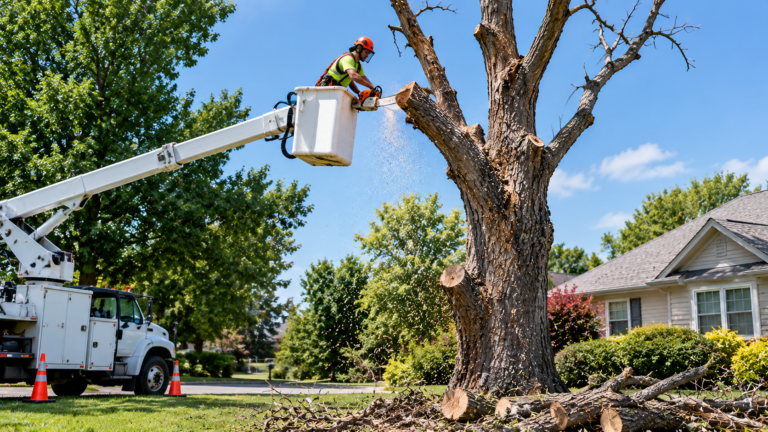
Dead Tree Removal Geneseo: When to Remove & Safety Risks
A dead tree rarely announces itself. One summer the maple by the driveway leafs out late, the next it doesn’t leaf out…
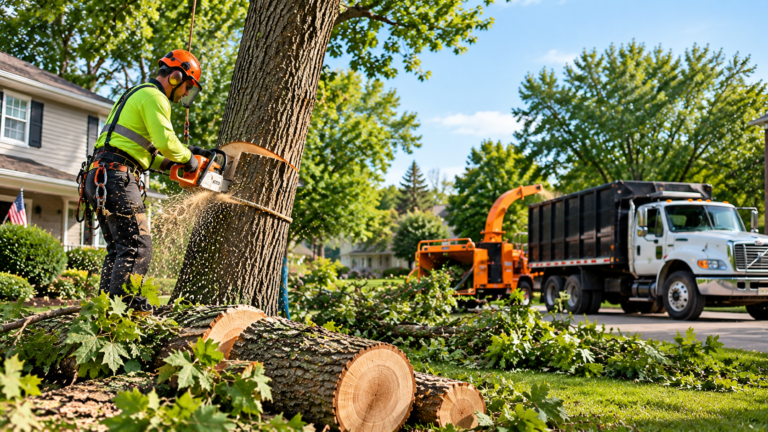
Affordable Tree Removal Near Me: Budget Options Without Compromising Safety
When a tree becomes damaged, diseased, unstable, or simply outgrows its space, removing it may be necessary to protect your property. However,…
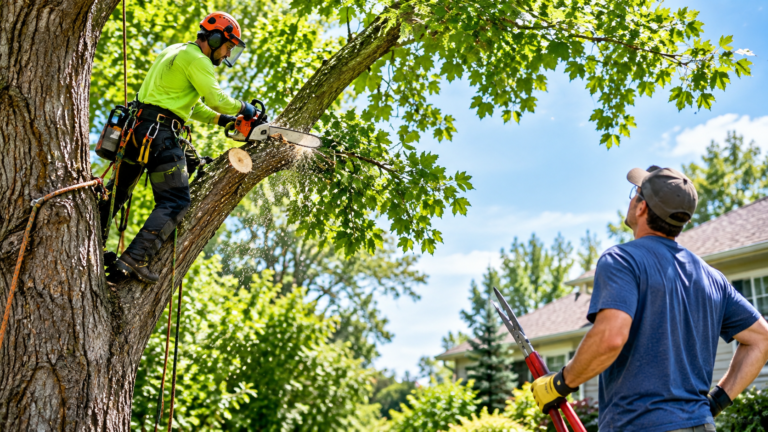
Tree Trimming Company Guide: Certified Arborists vs DIY (Why It Matters)
A branch hangs over your roof, and you wonder if you can handle it yourself. Maybe you can. Plenty of trimming is…