

Stump Grinding in Geneseo, NY: Fast, Clean, Affordable
If you’ve got a stump sitting in your yard right now, you already know it’s not going anywhere on its own. We get calls about stump grinding Geneseo NY homeowners have been putting off for a season or two, usually after mowing around it one too many times or watching new sprouts pop up where the tree used to be.
It’s a small job compared to a full tree removal, but it’s the one people delay the longest. This guide covers why that stump matters more than it looks like it does, what the grinding process actually involves, what it costs, and how to plant something worthwhile once it’s gone.
We’ve been grinding stumps around Livingston County long enough to know the questions homeowners actually ask, not just the ones in a sales pitch.
So we’ll answer those here, plainly, the way we’d explain it standing in your yard. A lot of folks are looking for affordable stump grinding Geneseo options without cutting corners on the work itself, and that’s a fair thing to want.
You shouldn’t have to choose between a fair price and a job done right, and in most cases here, you don’t have to.
Why Leftover Stumps Are More Than Just an Eyesore
A stump isn’t just an ugly lump in the lawn. It’s a slow-motion problem. Dead wood attracts carpenter ants and termites, and once those insects settle in, they don’t always stay put, they’ll work their way toward a shed, a deck, or your house if the stump sits close enough.
Stumps also send up root suckers, those thin new shoots that pop up in the grass for years after the tree came down, and mowing around them gets old fast. On top of that, a rotting stump becomes a tripping hazard, especially once it starts to soften and cave in the middle.
We’ve pulled kids’ bike tires out of stumps that looked solid on top and were hollow underneath. It’s not dramatic, but it’s a real risk sitting in the yard.
Our Grinding Equipment and Safety Standards
We use commercial-grade stump grinders, the kind with a rotating cutting wheel that chews through wood and root mass several inches below grade. Before we ever start the machine, we check for utility lines, sprinkler heads, and buried cables, because grinding blind into a gas line or an irrigation system turns a simple job into an expensive mistake.
Our Galbraith Tree & Shrub crew wears the standard protective gear, eye protection, hearing protection, and steel-toe boots, every time, no exceptions, no matter how small the stump looks. We also rope off the work area if there are kids or pets around the property.
It’s a fast process once we get going, but the setup and the safety checks take real time, and we don’t skip them to save five minutes.
Average Time to Grind Different Stump Sizes
A small stump, something under twelve inches across, usually takes fifteen to twenty minutes once the grinder is set up and running.
A mid-size stump in the eighteen to twenty-four inch range takes closer to thirty to forty-five minutes, depending on how deep the roots run and whether the wood is dry or still green.
Larger stumps, the big oaks and maples that have been in the ground for decades, can take an hour or more, especially if there’s a rock or old fence post buried nearby that the operator has to work around.
Multiple stumps on one property go faster per stump since the equipment is already staged and running. Most residential jobs, even with a few stumps, wrap up within a single visit.
Can You Grind a Stump Yourself? Honest Answer
Rental stores will hand you a stump grinder for a day, and plenty of homeowners try it. Here’s the honest answer: you can, but it’s harder and riskier than it looks in the demo video.
These machines have real torque, and a kickback from hitting buried rock or a root at the wrong angle can cause serious injury fast. Rental units also tend to be lighter-duty than what a tree service runs daily, so a big stump might take you all afternoon instead of twenty minutes, and you’re paying rental fees the whole time.
There’s also the cleanup afterward, since a rental grinder leaves a big pile of chips and loosened soil that someone still has to deal with once the machine goes back. If you’ve got a small, isolated stump with clear ground around it, a rental might be fine.
If there’s anything nearby you can’t afford to damage, or the stump is large, it’s worth calling someone who does this every week instead of once a year.
We’d rather tell you honestly that a rental could work for a small job than talk you into hiring us for something you can handle yourself.
What to Plant After Stump Grinding
Once the grinding is done, you’re left with a mound of wood chips and loose soil where the stump used to be. That leftover mulch actually makes decent starter material if you rake most of it aside and mix in fresh topsoil before planting anything with roots.
Grass seed works fine in that spot once the ground has settled for a couple weeks. If you’re after something with more presence, a small ornamental tree or a flowering shrub can usually go right back into that same spot, since the old root system will have broken down enough not to compete for space.
Avoid planting the same species that was there before if the original tree died from disease, since some pathogens linger in the soil. Our Galbraith Tree & Shrub crew gets this question often enough that we keep a short list of disease-resistant replacement species handy for exactly this situation.
A quick call to ask what’s safe to replant is worth it if the removed tree had any health issues.
Galbraith’s Stump Grinding Pricing in Geneseo
Pricing for stump grinding services usually comes down to stump diameter, root depth, and accessibility. A small stump in an open yard is going to cost less than a large stump wedged between a fence and a foundation, where the equipment has to be maneuvered carefully.
Tree stump removal cost in our area typically runs from a flat minimum for a single small stump up to a per-inch rate for larger or multiple stumps, and we always give a number before we start, not after.
We don’t upsell extra services you don’t need, and if a stump turns out smaller or larger than it looked over the phone, we adjust the quote on site before touching the machine, not after the invoice shows up.
Multiple stumps on the same property usually bring the per-stump price down a bit, since we’re already set up and running, and we’ll always mention that upfront if it applies to your job.
Schedule Your Stump Grinding Appointment
If you’ve been searching for stump removal near me and comparing quotes, we’d rather you call and ask questions than guess based on a website estimate.
At Galbraith Tree & Shrub, we walk the property, look at the stump, check for obstacles, and give you a straight number on the spot.
Most jobs get scheduled within the week, and we clean up the chip debris before we leave unless you’d rather keep it for mulch. If you want the stump grinding process explained in more detail for your specific situation, that’s a five-minute phone call, not a sales pitch.
Geneseo homeowners have been calling us for years because we show up, do the job right, and leave the yard usable again.
Frequently Asked Questions
How much does stump grinding cost in Geneseo, NY?
Cost depends on stump size, root depth, and how hard the spot is to access. Small stumps run a flat minimum fee, while larger or multiple stumps are priced per inch of diameter. We always confirm the number on site before starting any work.
Is stump grinding better than full stump removal?
Grinding is faster, cheaper, and less disruptive to your yard than digging out the entire root ball. Full removal leaves a large hole and disturbs more soil. For most residential properties, grinding down below grade solves the problem without the extra mess.
How deep do you grind a stump?
Most residential grinding goes four to six inches below ground level, which is enough to mow over the area and plant grass or shallow-rooted plants. Deeper grinding is available if you’re planning to plant a tree or shrub in that exact spot.
Will grinding a stump kill the roots underground?
Grinding removes the visible stump and the roots closest to the surface, but deeper roots will still decay naturally over time. Most won’t send up new sprouts once the stump is gone, though a few stubborn species may need a follow-up treatment.
Can I grind a stump near my house foundation?
Yes, but it requires extra caution and a smaller grinding wheel in tight spaces. We check for utility lines and foundation clearance before starting. Stumps close to structures take longer since the equipment has to be maneuvered carefully around obstacles.
What do you do with the wood chips after grinding?
We can haul them away, or leave them on site if you’d like free mulch for garden beds. Most homeowners keep at least some of it. Just let us know your preference before we start so we plan the cleanup accordingly.
How soon can I plant something after stump grinding?
You can plant grass seed within a couple weeks once the ground settles. For trees or shrubs, give it three to four weeks so the loose soil has time to compact naturally and support new root growth properly.
Keep Reading
More from the blog
Practical guidance on looking after the trees on your property.
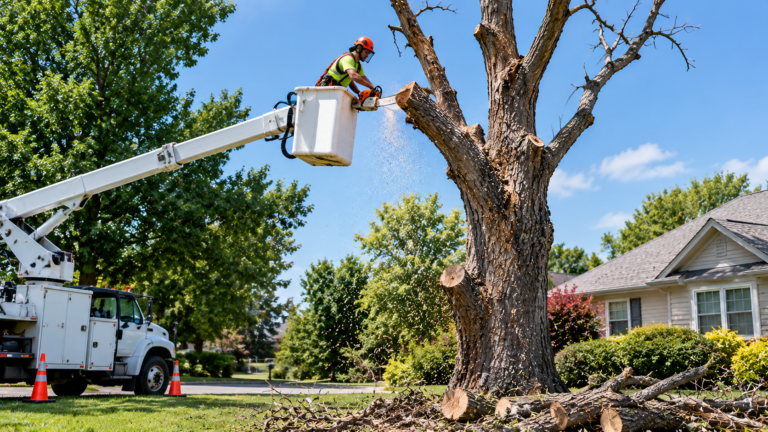
Dead Tree Removal Geneseo: When to Remove & Safety Risks
A dead tree rarely announces itself. One summer the maple by the driveway leafs out late, the next it doesn’t leaf out…
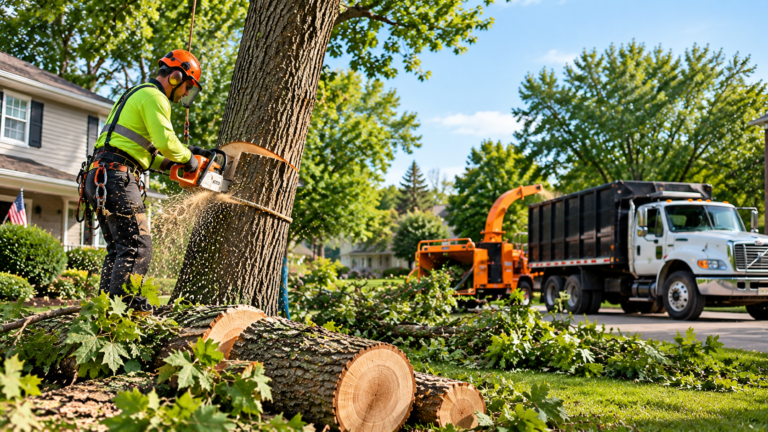
Affordable Tree Removal Near Me: Budget Options Without Compromising Safety
When a tree becomes damaged, diseased, unstable, or simply outgrows its space, removing it may be necessary to protect your property. However,…
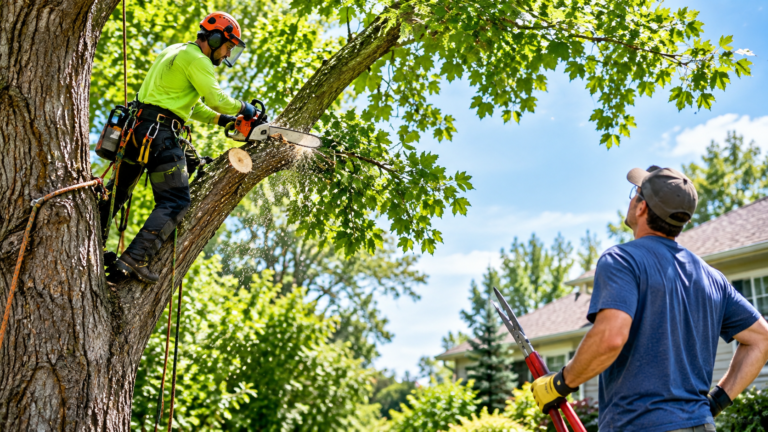
Tree Trimming Company Guide: Certified Arborists vs DIY (Why It Matters)
A branch hangs over your roof, and you wonder if you can handle it yourself. Maybe you can. Plenty of trimming is…