

Dangerous Tree Removal in Geneseo: How We Handle High-Risk Situations
I’ve stood under trees that made the hair on my neck stand up before the saw ever touched bark. You get a feel for it after enough years. The lean that’s a little too far off center. The crack running up a trunk that shouldn’t be there.
That gut instinct doesn’t come from a manual. It comes from doing dangerous tree removal that Geneseo homeowners call us for, year after year, and paying attention to what almost went wrong.
Not every tree removal is routine. Some jobs come with real risk attached, to the crew, to the house, to whatever’s parked in the driveway. At Galbraith Tree & Shrub, this post walks through how we size up those situations and handle them without cutting corners.
What Makes a Tree “Dangerous” by Arborist Standards
A dangerous tree isn’t always the one that looks the worst. Sometimes a tree with half its bark gone is stable as a rock, and a healthy-looking one is one storm away from coming down. What actually matters is structural integrity.
Cracks in the trunk. Root damage from construction or flooding. Cavities that have hollowed out more of the interior than you’d guess from the outside.
Lean angle matters too. A slight lean is normal; trees grow toward light and adjust over decades. A sudden lean, or one that’s gotten noticeably worse over a season, is a different story. That’s usually a sign the root system is failing, and leaning tree removal in situations like that needs to happen before the tree makes the decision for you.
Location plays into the danger rating as much as the tree itself. Dead tree removal in Geneseo, NY, jobs over an open field are a very different story than the same dead tree fifteen feet from a bedroom window.
Arborists rate risk based on the tree’s condition and what’s called the “target,” meaning whatever’s in the fall zone. House, garage, power line, driveway, kids’ swing set. All of it factors in.
Risk Assessment Process Before Dangerous Removals
Before anyone climbs or a saw starts, we walk the whole property. Not just the tree in question, but the ground around it too. Soil that’s heaving, mushrooms growing at the base, or exposed roots all tell us something about what’s happening underground that we can’t see just by looking up.
We check for co-dominant stems, which are basically two trunks competing for the same space, a common failure point in storms. We look at crown density, dead limbs, and whether decay has traveled far enough into the trunk to compromise its ability to hold weight.
A hazard tree assessment in NY properties, especially after a hard winter, isn’t a five-minute glance. It’s methodical, and it’s the step that decides everything that happens after.
Weather gets factored in, too. Wind direction, forecasted gusts, and ground saturation from recent rain. A tree that would be a manageable removal on a calm, dry day becomes a much bigger risk when the ground’s soft and a storm’s rolling through.
We reschedule when conditions aren’t right, even if that means telling a homeowner the job has to wait another day.
Rigging and Sectional Felling Techniques We Use
Once we’ve assessed the tree and decided how to approach it, the technique depends entirely on the target zone. If there’s open space to drop the tree in one piece, that’s the fastest and often safest option. But most dangerous removals don’t have that luxury.
Sectional felling means taking the tree down in controlled pieces, top to bottom, rather than as one whole trunk. Each cut gets planned before it’s made. Rigging ropes and pulley systems lower sections to the ground slowly instead of letting them free-fall, which protects roofs, fences, gardens, whatever’s below.
Climbers use spurs or rope-and-saddle systems depending on the tree’s condition, and every cut gets communicated to the ground crew before it happens. Nobody’s guessing. A crane gets brought in on the biggest or most structurally compromised trees when rigging alone can’t guarantee control. It’s slower work than people expect, and that’s on purpose.
Working Near Power Lines: Utilities Protocols
Tree removal near power lines is its own category of dangerous, and it gets treated that way. Before any work starts near lines, we contact the utility company. Depending on the voltage and distance, they may need to de-energize the line or send someone out to be present during the work.
We maintain strict clearance distances at all times, and untrained hands should never assume a line is safe just because it looks like a phone or cable line. Some of the most serious accidents in this industry happen because someone assumed a wire was low-voltage when it wasn’t. If a tree is leaning into or tangled with a line, that job gets escalated immediately, not scheduled for later in the week.
Insulated equipment, careful rope placement, and constant communication with the ground crew are non-negotiable on these jobs. There’s no rushing a tree removal near power lines. The extra hour it takes to do it right is nothing compared to the alternative.
Case Study: A Dangerous Removal in Geneseo
A homeowner off one of the rural roads outside Geneseo called us after a wind storm shifted a massive silver maple until it was leaning hard toward the house, maybe fifteen degrees off vertical, with visible root heave on the uphill side. Classic emergency tree removal in Geneseo, NY. No time to wait for a calm week.
We assessed it that afternoon. The lean, the root plate lifting out of the ground, and a split starting where two major limbs met, all told us this tree could go at any time, storm or no storm. We rigged it in sections, working from the top down, lowering each piece with ropes to avoid dropping weight onto the compromised root ball or anywhere near the house.
It took most of a day, longer than a standard removal, but the property came through without a scratch on the roof or the landscaping below. That’s the whole point of doing it this way. Slower, controlled, boring, even, and nothing gets damaged that didn’t already need to come down.
Why Dangerous Tree Removal Should Never Be DIY
Every year, we get called out to finish a job someone started themselves, usually after a chainsaw got pinched, a cut went wrong, or the tree didn’t fall where they expected. Sometimes it’s worse than that.
A dangerous tree carries stored energy, tension in the wood, and unpredictable weight distribution, which a homeowner has no way of reading the way a trained crew does.
Ladders and chainsaws are already a rough combination. Add a leaning, cracked, or storm-damaged tree into that mix, and the margin for error disappears.
Galbraith Tree & Shrub has seen the aftermath of well-intentioned DIY attempts more times than we’d like, and it’s almost always avoidable. If a tree looks even a little questionable, that’s the moment to call someone, not the moment to grab a ladder.
Free Hazard Assessment for Your Property
If you’ve got a tree on your property that’s got you second-guessing, a lean that wasn’t there last year, dead limbs overhead, bark peeling in a way that seems off, it costs nothing to have it looked at.
Galbraith Tree & Shrub offers a free hazard assessment for Geneseo-area homeowners, no pressure, no obligation.
We’ll walk the property, look at what’s going on, and give you a straight answer about whether it needs attention now or can wait.
Trees don’t send a warning before they fail. Getting eyes on a questionable one early is the cheapest insurance you’ll ever buy for your house, your car, and the people who live there.
Frequently Asked Questions
How do I know if a tree on my property is actually dangerous?
Look for cracks in the trunk, a lean that’s increased recently, mushrooms or fungus at the base, and dead limbs in the upper canopy. Any of these on their own is worth a professional look. Together, they’re a strong sign the tree needs attention soon.
Is emergency tree removal more expensive than a scheduled removal?
Sometimes, it requires immediate crew availability and often more complex rigging. But delaying a genuinely hazardous tree usually costs more in the long run through property damage. We give straight quotes either way, based on the actual risk involved.
Can a leaning tree be saved instead of removed?
Occasionally, if the lean is minor and the root system is still intact, cabling or bracing can stabilize it. A trained assessment tells you which category your tree falls into. Once root failure has started, though, removal is usually the safer path.
How close to power lines can tree crews safely work?
It depends on the voltage, but clearance distances are strict and set by utility guidelines. We coordinate directly with the power company before starting any job near lines, and de-energizing the line is sometimes required before work begins.
What’s the difference between sectional felling and a standard felling cut?
A standard felling cut drops the whole tree in one piece into open space. Sectional felling removes the tree in controlled pieces, lowered with ropes, used when there’s a structure, line, or other target too close for a full drop.
Why shouldn’t I attempt a dangerous tree removal myself?
Trees under tension or with hidden decay behave unpredictably, and a wrong cut can release stored energy fast. Combined with chainsaws and heights, the margin for serious injury is high. Trained crews read those risks in ways homeowners typically can’t.
Does a hazard assessment cost anything?
No. We offer a free hazard assessment for Geneseo-area properties. We’ll evaluate the tree’s condition, root stability, and proximity to structures, then give you a clear recommendation without any pressure to book work on the spot.
Keep Reading
More from the blog
Practical guidance on looking after the trees on your property.
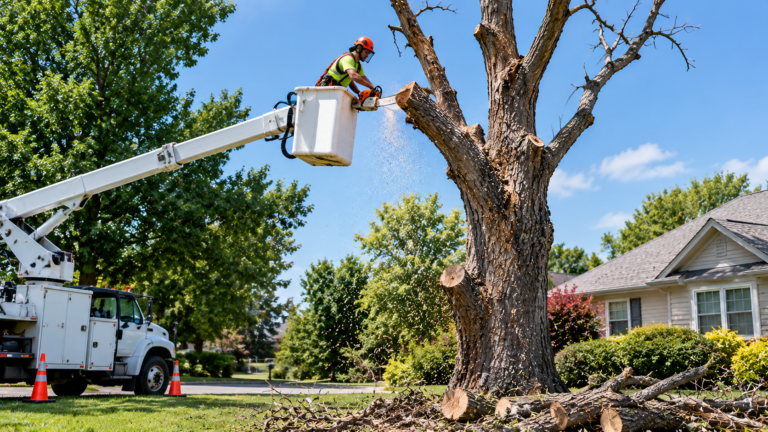
Dead Tree Removal Geneseo: When to Remove & Safety Risks
A dead tree rarely announces itself. One summer the maple by the driveway leafs out late, the next it doesn’t leaf out…
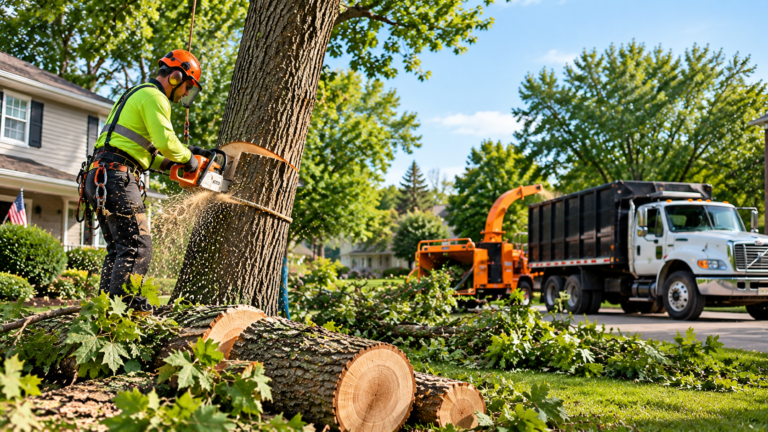
Affordable Tree Removal Near Me: Budget Options Without Compromising Safety
When a tree becomes damaged, diseased, unstable, or simply outgrows its space, removing it may be necessary to protect your property. However,…
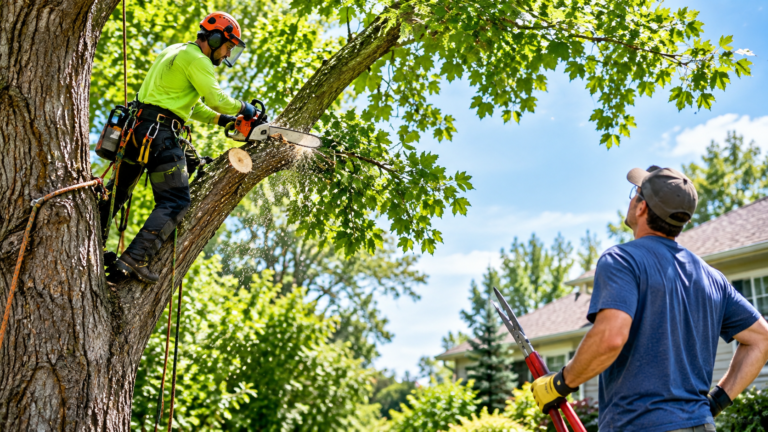
Tree Trimming Company Guide: Certified Arborists vs DIY (Why It Matters)
A branch hangs over your roof, and you wonder if you can handle it yourself. Maybe you can. Plenty of trimming is…