Tree Removal Services: Your Complete Buyer’s Guide (2026)
Most people call about a tree when something has already gone wrong. A limb comes down in a storm. A trunk starts leaning after a wet spring. Or the tree that looked fine last summer now has no leaves on one side. At that point, you need straight answers, not a sales pitch.
This guide covers how tree removal services work, what they cost, and how to hire the right crew in Geneseo without getting burned. It’s written by the crew at Galbraith Tree & Shrub, based on what we see in yards every week.
When a Tree Really Needs to Come Down
Not every sick-looking tree has to go. Some can be pruned, braced, or treated and live for many more years. Still, a few warning signs point toward removal.
Dead trees are the biggest one. If a tree has no leaves in summer, or large branches that snap easily and show dry, brittle wood, it’s likely dead. Dead wood gets weaker every season, and it can fail with no warning. Other red flags include deep vertical cracks in the trunk, mushrooms growing at the base, and soft, crumbly wood that a screwdriver pushes into easily. A trunk that has started leaning suddenly, especially with soil lifting on the opposite side, is a serious concern.
Location matters as much as condition. A weak tree in an open field is a nuisance. A weak tree over your roof, driveway, or a neighbor’s fence is a liability. Roots that lift sidewalks or crowd your foundation can also justify removal, though a certified arborist should look before anyone makes that call.
One more thing worth saying: a tree with a problem doesn’t always mean a tree that must go. A good company will tell you when trimming or treatment is enough. If someone says every tree needs to be removed, get a second opinion.
What “Professional Tree Removal” Actually Means
The phrase gets used a lot, so here is what it should mean in practice. Professional tree removal means trained people, proper equipment, insurance, and a plan made before the first cut. It does not mean a guy with a chainsaw and a pickup.
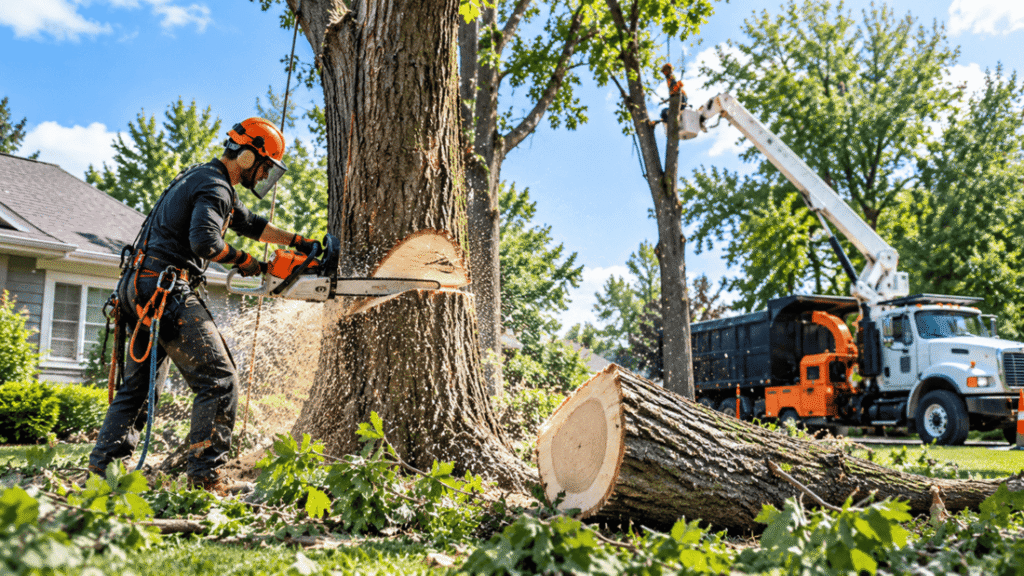
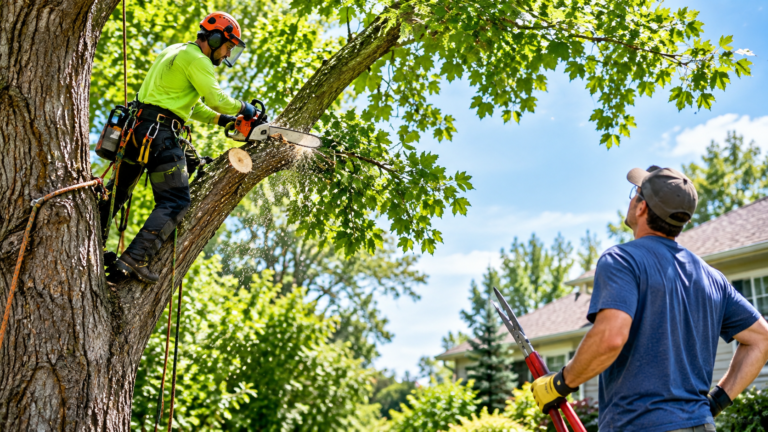
Trees are heavy and unpredictable. A mid-size oak can weigh several tons, and wood under tension can pinch a saw or swing in ways that surprise even experienced workers. Crews use ropes, rigging, and controlled cuts to lower sections in pieces so nothing lands on your house. On tight lots with power lines, sheds, or pools nearby, a crane or bucket truck may be the right tool.
Look for a crew that walks the property with you, points out hazards, and explains the plan in plain terms. If they can’t tell you how the tree will come down, keep looking. Anyone can say they do professional tree removal. The ones who really do it will show you insurance paperwork without being asked twice.
How to Choose a Tree Removal Company in Geneseo
Searching for a tree removal company or typing “tree removal services near me” into your phone will pull up a long list. Ratings and photos help, but they’re only a starting point. Here is what to check before you sign anything.
Insurance. Ask for a certificate of insurance showing both liability coverage and workers’ compensation. Ask the insurance company to send it directly if you want to be sure. If an uninsured worker gets hurt on your property, you could end up in a legal mess. The same goes for damage to your home.
Credentials. Many arborists hold certification through the International Society of Arboriculture (ISA). Certification doesn’t guarantee good work, but it shows the person has studied tree biology and safety. You can search ISA’s website to confirm someone is actually certified.
A written estimate. It should describe the work, what’s included, and whether cleanup and stump grinding are part of the price. Vague quotes cause the most arguments later.
Local reputation. A company that has worked around Geneseo for a while has neighbors who can vouch for it. Ask for references, and drive by a recent job if you can. Check that the business has a real address and phone number, and that reviews read like they came from real customers with real details, not the same phrase repeated.
No pressure. Be careful with anyone who knocks on your door after a storm and wants cash today. Storm chasers show up, take a deposit, and vanish. A reputable crew will give you time to think and compare.
What Tree Removal Costs, and Why Prices Vary
Nobody can give you an honest price without seeing the tree. Cost depends on the job, and here are the main factors.
Size is the first. A small tree in an open yard is a quick job. A tall tree with a wide canopy takes more time, more people, and more risk. Access is next. If a truck can back up to the tree, it’s easier. If everything has to be carried or lowered over a house, the price goes up.
Condition also plays in. Dead or rotting trees are often more dangerous to climb, so crews may need extra equipment. Nearby obstacles like power lines, buildings, and fences add work. Utility lines may require coordination with the power company before anyone starts.
Then there’s cleanup. Some quotes include hauling away all the wood and brush, and some leave it for you. Stump grinding is usually priced separately. Ask what’s included so you can compare quotes fairly. The cheapest bid isn’t always the best deal if it leaves you with a pile of logs and a stump.
Emergency work costs more because crews have to rearrange schedules, sometimes work at night, and deal with unstable trees. If it isn’t an emergency, you’ll usually save money by scheduling ahead.
Safe Tree Removal: What Happens on the Job
Safe tree removal starts before the saw starts. A good crew begins by studying the tree: which way it leans, where the weight sits, where dead limbs are, and what’s underneath. They’ll also look at the ground, the weather, and anything that could be hit.
Next comes setup. The crew marks a drop zone, moves vehicles and yard items, and keeps people and pets clear. Climbers or a bucket truck then take the tree down in sections, starting from the top. Ropes lower heavy limbs slowly. In a wide-open yard, a tree may be felled whole, but only if there’s plenty of space and the tree is sound enough to control.
Protective gear matters: helmets, eye and hearing protection, and cut-resistant chaps. Watch for whether the crew wears it. It tells you a lot about how a company treats safety overall.
After the wood is down, crews cut it into pieces, chip the brush, and clean up. Rake and blow off the area, check for nails or debris, and haul the material away if that’s in your quote. A tidy finish is a sign of a crew that takes pride in the job.
Never try a large removal yourself. Homeowners get hurt every year taking on trees that look manageable. Anything you can’t reach from the ground, or anything near a structure or power line, is a job for a professional.
Storm Damage and Emergency Tree Removal
Geneseo sees its share of heavy snow, ice, and summer thunderstorms. All of these can bring down limbs or whole trees. When that happens, the first step is safety, not cleanup.
Stay away from any tree touching a power line. Treat every downed wire as live and call your utility company. If a tree has fallen on your house or is blocking an exit, call emergency tree removal services, and if anyone is in danger, call 911 first.
For trees that are down but not causing immediate danger, take photos before anything is moved. Your homeowner’s insurance may cover damage from a fallen tree, especially if it hits your home. Coverage varies by policy, so call your insurer and ask what they need. Getting photos and a written estimate helps the claim go smoothly.
Be honest with yourself about what’s urgent. A branch dangling over the driveway is a real hazard. A tree lying across the back lot can usually wait a day or two for a proper crew, and waiting often beats hiring the first truck that shows up.
Stump Grinding, Cleanup, and What Comes After
Once a tree is gone, you still have a stump. Left alone, it can sprout, attract insects, and become a tripping hazard. Stump grinding uses a machine to chew the stump down below ground level. Most grinders take it down several inches, and the chips can be used as mulch or fill.
If you plan to plant a new tree in the same spot, ask the crew how deep to grind. Before any grinding or digging, call 811, the national call-before-you-dig line, so underground utilities get marked. It’s free, and it’s the law in most places.
Think about replanting too. A tree that fits the space, like a smaller ornamental near power lines or a sturdy native species in an open yard, can give you shade for decades. Trees planted in the right place need far less trouble later.
Permits and Local Rules
Rules differ by town and village, so check before you cut. Some municipalities require permits for removing certain trees, especially larger ones or those in protected areas or along public streets. If a tree sits on the property line, it usually belongs to both owners, and you’ll want your neighbor’s agreement before removal.
A reputable tree removal company will often know the local requirements and can tell you what to ask about. Still, the responsibility is yours as the property owner, so a quick call to your local office can save a fine.
Why Experience Matters
Reading a tree takes years. Two trees that look alike from the ground can behave completely differently once the first cut is made. Experienced workers notice hollow spots, hidden decay, and stressed wood that a quick glance would miss. They also know when to stop and change the plan.
That’s why we encourage people to ask questions. How many trees like this have you taken down? What could go wrong here? What’s your plan if it does? Honest crews answer these easily. At Galbraith Tree & Shrub, we’d rather spend ten minutes explaining a job than have you feel unsure about it.
Frequently Asked Questions
How do I know if my tree is dead?
Check for bare branches in summer, peeling bark, and brittle twigs that snap without bending. Scratch a small twig; green underneath means it’s alive. If most of the tree looks lifeless, have a certified arborist confirm before deciding.
Do I need a permit to remove a tree in Geneseo?
It depends on the tree and where it sits. Some towns require permits for large or street-side trees. Call your local municipal office before scheduling work, and ask your tree crew what they know about local rules.
How long does tree removal take?
Most residential jobs take a few hours to a full day. Small trees go fast. Large trees near buildings or power lines take longer because crews remove them in sections. Stump grinding and cleanup add some extra time.
Is stump grinding included in removal?
Usually not. Many companies price stump grinding separately, though some bundle it. Ask before you accept a quote, and make sure the written estimate says whether the stump, wood, and brush are being removed.
Will homeowner’s insurance cover a fallen tree?
Often it covers damage to your home or other structures when a tree falls, but coverage varies. Removal of a tree that caused no damage may not be covered. Call your insurer, take photos, and keep written estimates.
What should I ask before hiring a crew?
Ask for proof of liability and workers’ compensation insurance, a written estimate, references, and details on cleanup. Also ask how they’ll take the tree down. A crew that explains its plan clearly is usually a safer choice.
Can I remove a tree myself to save money?
Small trees you can reach from the ground may be manageable with the right tools. Larger trees are dangerous because of their weight, height, and unpredictable movement. Anything near a house or power line should go to professionals.
Final Thoughts
Removing a tree is a real decision, and it should feel like one you understand. Get more than one estimate, check insurance, ask how the work will be done, and don’t let anyone rush you. Whether you’re comparing tree removal services or just trying to figure out if a tree is a danger, take your time and trust your gut about who answers your questions plainly.
If you’d like a second set of eyes on a tree in your yard, Galbraith Tree & Shrub is happy to take a look and tell you honestly what we see, even if the answer is that it doesn’t need to come down.
Keep Reading
More from the blog
Practical guidance on looking after the trees on your property.
Dead Tree Removal Geneseo: When to Remove & Safety Risks
A dead tree rarely announces itself. One summer the maple by the driveway leafs out late, the next it doesn’t leaf out…
Affordable Tree Removal Near Me: Budget Options Without Compromising Safety
When a tree becomes damaged, diseased, unstable, or simply outgrows its space, removing it may be necessary to protect your property. However,…
Tree Trimming Company Guide: Certified Arborists vs DIY (Why It Matters)
A branch hangs over your roof, and you wonder if you can handle it yourself. Maybe you can. Plenty of trimming is…