
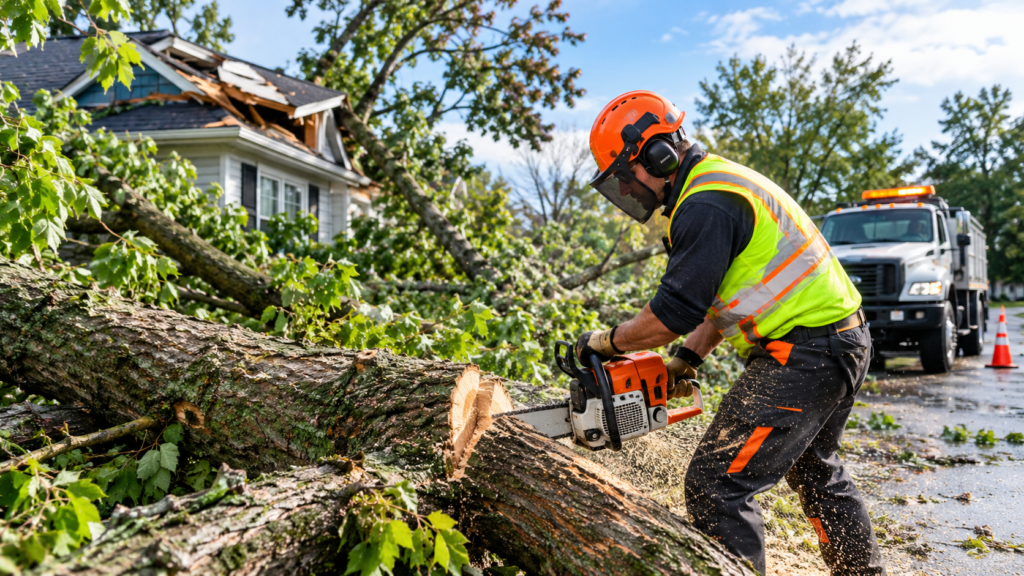
Emergency Tree Service: How Fast Response Saves Lives & Property
What to Do When a Tree Comes Down in Geneseo
A tree doesn’t pick a good time to fall. It happens at 4 a.m. in an ice storm, or on a calm afternoon after a week of saturated ground. Either way, the next few hours matter.
This guide explains what counts as a tree emergency, what to do while waiting for help, how to choose the right emergency tree service, and what to expect with insurance and cleanup afterward.
It’s written for Geneseo-area homeowners and property owners who want straightforward advice from a crew that understands local tree emergencies. That’s the approach we take at Galbraith Tree & Shrub.
What Counts as a Tree Emergency
Not every downed branch needs a midnight call. Some situations do.
A tree or large limb on your house, garage, or vehicle is an emergency. So is anything blocking your driveway or a road so that you can’t get out, or that emergency vehicles couldn’t get in.
A tree tangled in power lines is the most urgent of all. A tree that has split, cracked at the base, or started leaning after a storm also qualifies, even if it hasn’t fallen yet. Those are the ones that surprise people.
A fallen limb in the back corner of the yard, with no structure, line, or path in its way, can usually wait until daylight. When you search for emergency tree removal near me, ask yourself first: is anyone at risk, is anything being damaged right now, or is something likely to get worse tonight? If yes, treat it as urgent. If no, a regular appointment is fine and often cheaper.
First Steps Before the Crew Arrives
Your first job is staying safe. The tree can wait.
Get everyone away from the tree and away from the area where it could shift or fall further. If a tree is on your house and you’re worried about the structure, go outside. If there’s any chance a power line is involved, call 911 and your utility company. Treat every downed line as live, even if it isn’t sparking or humming. Stay well back, keep kids and pets away, and don’t touch anything the line or tree is touching, including fences and vehicles.
If it’s safe, take photos and video of the damage from a distance. You’ll want them later for insurance. Don’t try to cut a tree that’s under tension, pinned against something, or resting on a structure.
Trees and limbs that look still can spring, roll, or drop without warning. This is how many chainsaw injuries happen. Even people who cut firewood every fall are often surprised by how differently a storm-loaded tree behaves.
Why Fast Response Matters
Speed isn’t just about convenience. Delays cost money and sometimes safety.
A tree resting on a roof can punch through the sheathing, and rain follows quickly. A tree leaning on another tree can shift as wind picks up or as snow and ice add weight. A trunk on a road or driveway can trap people or block help. And a cracked tree that stays up through the next gust can come down on something that wasn’t damaged the first time.
An experienced emergency tree service crew can assess what’s holding the tree up, decide where the weight is going, and remove it in an order that doesn’t cause a second problem.
That order matters. Cut the wrong piece first and a stable situation becomes an unstable one. Crews work from the top down or from the outside in, depending on what’s bearing the load. It’s slow, deliberate work, and it looks different from a normal removal.
Types of Storm Damage We See
Storm damage tree removal usually falls into a few categories.
Uprooted trees are common after heavy rain, when saturated soil can’t hold roots. These often fall whole, root ball and all, and they leave a hole and a lifted chunk of lawn behind.
Snapped trunks happen in high winds, often with trees that had internal decay no one could see from the outside. Ice and snow loading tends to break limbs, especially on trees with weak branch unions, and some species are more prone to this than others. Lightning strikes can split a trunk or shatter limbs, and the damage sometimes doesn’t show up fully for days.
Then there’s the quiet damage. A tree can come through a storm with cracks, torn roots, or hanging broken limbs, often called “widowmakers.” They look minor from the ground. They’re not. A good assessment after a storm includes looking up, not just at what landed.
Power Lines and Utility Work
Trees near power lines are a separate category, and the rules are different.
Tree crews are generally not allowed to work near energized lines unless they’re specially qualified, and in many cases the utility itself has to de-energize or handle the line first. If a tree is on a service line running to your house, you may need the utility to disconnect it before anyone can safely start. That’s not the tree company dragging its feet. It’s how it should work.
If you’ve lost power and there’s a tree on the line, call the utility first or at the same time as the tree company. Ask the crew what they can do before the line is cleared, because sometimes they can handle everything away from it and wait for the utility on the rest.
What a Crew Does When They Arrive
Expect a walk-around first. A good crew will look at the whole situation before starting a saw.
They’ll check for hazards: lines, gas meters, compromised structures, other trees under stress. They’ll decide where to set up, how to protect the property, and whether rigging, a crane, or a bucket truck is needed. Then they’ll work in a set sequence, often securing the tree before cutting so that pieces don’t drop onto the roof.
Cleanup depends on the job. In an emergency, the first goal is making the site safe and removing the immediate danger. Full debris removal and stump work can come afterward.
This is also when you’ll hear the honest part of the conversation. Sometimes the best move in the middle of the night is to cut the tree off the structure, tarp what’s exposed, and come back in daylight for the rest. That’s not cutting corners. It’s often the safest way to do it.
Choosing Help: Searching for Emergency Tree Services Near Me
When you’re stressed and searching for emergency tree services, it’s tempting to call the first number you find. A few quick checks help.
Look for a local company with a real address and phone number, not just a call-center listing. Check the Google Business Profile: how long they’ve been listed, whether reviews read like real customers describing real jobs, and whether the hours and service area match what you need.
Ask whether they carry liability insurance and workers’ compensation, and ask for proof. If a crew gets hurt on your property without coverage, that can become your problem. Ask if they have an ISA Certified Arborist on staff, which is a credential from the International Society of Arboriculture, and ask who will actually be on site.
Be careful with anyone who shows up uninvited after a storm. Storm chasers go door to door, and some do fine work, but many ask for cash upfront, are gone by the weekend, and carry no insurance.
Local crews, like Galbraith Tree & Shrub, have to live with their reputation in the same community where their customers do. That’s a real incentive to do the job right.
About 24-Hour Service in Geneseo
Plenty of people search for 24-hour tree service in Geneseo, NY after a storm, and the question is fair. Hours vary by company. Some offer true round-the-clock response, some offer an after-hours line with a callback, and some respond first thing in the morning.
During a major storm, every company in the region is stretched. Crews work in priority order, which usually means life safety first, then houses and structures, then roads, then everything else.
So when you call, give clear information: where you are, what the tree is touching, whether anyone is hurt or trapped, and whether lines are involved. That helps the dispatcher put you in the right place in line. And ask for a realistic timeframe instead of a promise. An honest “tomorrow afternoon” beats a vague “we’ll be there soon.”
Insurance and Documentation
Insurance is where many homeowners get tripped up.
In general, homeowners policies often cover tree removal when a tree damages a covered structure, such as your house, garage, or fence, but coverage and limits vary a lot between policies. A tree that falls and hits nothing may not be covered for removal at all, or may fall under a small debris-removal limit. Trees that fall because of neglect or known disease can get complicated. We can’t tell you what your policy covers. Your agent can.
Do these things early. Photograph everything before anything moves, if it’s safe. Keep receipts. Ask the crew for a written invoice that describes the work, since adjusters like details.
Call your insurer promptly and ask about emergency mitigation, like tarping, which many policies expect you to do to prevent further damage. And if a neighbor’s tree fell onto your property, it’s worth talking to both insurance companies, since responsibility depends on the circumstances.
What It Costs
Emergency work typically costs more than scheduled work. That’s reality, not gouging.
Crews are working nights and weekends, the job is riskier, and the equipment is often more specialized. Price depends on the tree’s size, what it’s resting on, access for equipment, whether lines are involved, and how much cleanup is included. A small tree in an open yard is a very different job from a large oak on a roof.
Ask for the price and what it includes before work starts, even at night. A reputable crew will explain it. Be wary of anyone who won’t give a number or insists on payment before they’ve looked at the job. Get it in writing when you can, even if it’s a text or a quick estimate on a form.
Preventing the Next Emergency
Many tree emergencies don’t come as a surprise to a trained eye. Dead branches, fungus at the base, cracks in the trunk, heavy leans, and trees that have had roots cut during construction are common warning signs. Co-dominant trunks, where two main stems grow upward together with a tight V-shaped union, tend to split under load.
Regular inspection and pruning help. So does removing trees that are clearly declining or dead. Ash trees in this region have been hit hard by emerald ash borer, and dead ash becomes brittle and unpredictable, so it’s worth having them looked at. A short evaluation before storm season costs a lot less than a rooftop repair, and it lets you make decisions in daylight instead of at midnight.
A Few Local Notes
Around Geneseo, we see a mix of mature shade trees in the village, large trees on farm and rural properties, and wooded lots where trees lean over driveways and lines. Each has its own risks.
Older village trees often have decay at the base or in the crown. Rural trees can be hard to reach, which affects equipment and time. Heavy wet snow, ice, and strong winds are the usual culprits here, and they tend to find the weak trees first.
If you aren’t sure whether a tree is a problem, have someone look at it before the weather forces the question.
Frequently Asked Questions
What counts as an emergency tree service call?
A tree on a structure, vehicle, or power line; one blocking a road or driveway, or one that has cracked or leaned and could fall. If nothing is threatened, it can usually wait for a regular appointment.
What should I do first if a tree falls on my house?
Get everyone outside and away from the tree. If a power line may be involved, call 911 and your utility. Take photos from a safe distance, then call a licensed, insured tree company and your insurer.
Should I cut a fallen tree myself?
Usually not. Storm-damaged trees can be under tension, and limbs may shift, roll, or spring without warning. Chainsaw injuries are serious. If a tree is on a structure or near lines, leave it to trained crews with the right equipment.
Does homeowners insurance cover emergency tree removal?
Often, if the tree damages a covered structure, but limits and conditions vary. A tree that hits nothing may not be covered. Call your agent, ask what’s included, and keep photos, invoices, and receipts for the claim.
How quickly can a crew get to me after a storm?
It depends on the storm and call volume. Crews work in priority order: life safety, then structures, then roads, then everything else. Ask for a realistic timeframe and give clear details so you’re placed correctly.
How do I know a tree company is legitimate?
Ask for proof of liability insurance and workers’ compensation, check their Google Business Profile and reviews, and confirm they have a local address. Be cautious of anyone who knocks on your door after a storm and asks for cash upfront.
Why does emergency work cost more?
Night and weekend hours, higher risk, and specialized equipment all raise the price. Ask what’s included before work starts. A good crew will explain the cost, give you a written estimate when possible, and not pressure you.
Keep Reading
More from the blog
Practical guidance on looking after the trees on your property.
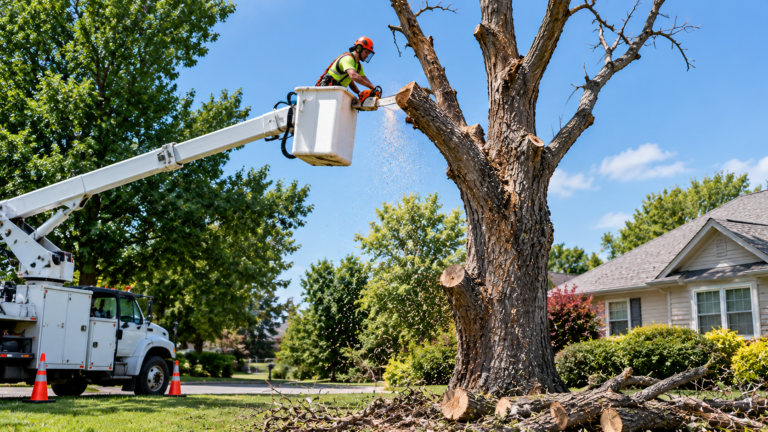
Dead Tree Removal Geneseo: When to Remove & Safety Risks
A dead tree rarely announces itself. One summer the maple by the driveway leafs out late, the next it doesn’t leaf out…
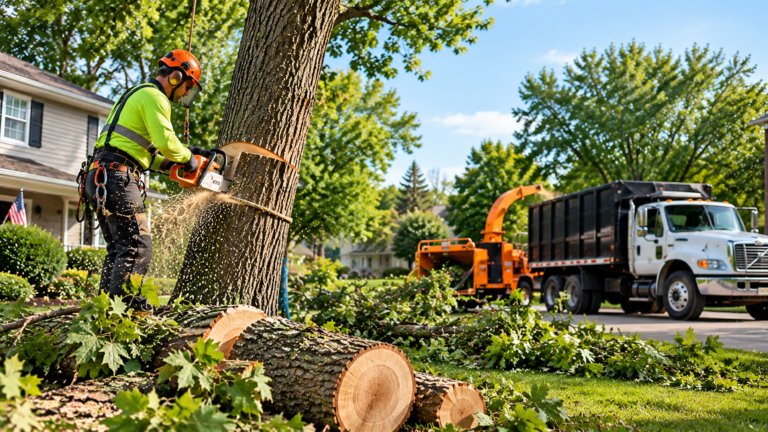
Affordable Tree Removal Near Me: Budget Options Without Compromising Safety
When a tree becomes damaged, diseased, unstable, or simply outgrows its space, removing it may be necessary to protect your property. However,…
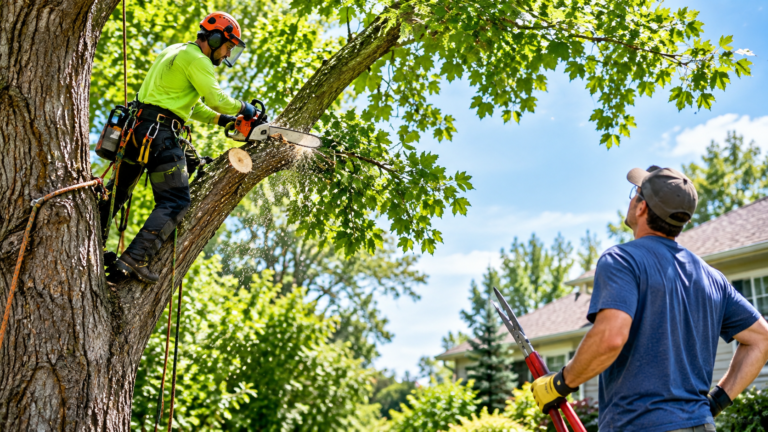
Tree Trimming Company Guide: Certified Arborists vs DIY (Why It Matters)
A branch hangs over your roof, and you wonder if you can handle it yourself. Maybe you can. Plenty of trimming is…