
Brush Removal in Geneseo, NY: Clearing Land the Right Way
An overgrown property doesn’t fix itself. Every season you leave it, the brush gets thicker, the root systems go deeper, and what might have been a straightforward clearing job turns into something that requires real equipment and real experience to handle correctly.
Livingston County properties- rural parcels on the edge of Geneseo, overgrown lots along the Genesee River corridor, old farm fields transitioning to new use- all follow the same pattern. Invasive shrubs establish, volunteer saplings fill in, and within a few seasons, manageable land becomes a dense tangle that a weekend with a chainsaw won’t solve.
This covers what brush removal in Geneseo, NY, actually involves, when it’s the right call, what equipment handles it correctly, and what it typically costs in Livingston County.
What Is Brush Removal and When Do You Need It?
Brush removal is the clearing of woody vegetation- shrubs, saplings, invasive species, and dense undergrowth- from a property that’s become overgrown or needs preparation for a specific use.
It sits between lawn maintenance and full tree removal. A property that hasn’t been managed in several years typically has a mix of tall grass, invasive shrub species, volunteer tree growth from four to fifteen feet, and accumulated woody debris from previous storms.
Brush removal addresses all of it systematically, leaving a cleared surface that can be graded, seeded, developed, or managed going forward.
You need it when vegetation has progressed past what a mower can handle. When multiflora rose, autumn olive, buckthorn, or Japanese knotweed has established across a significant portion of the lot.
When new construction requires clearing before grading can begin. When a property purchased in an overgrown state needs to come back into usable condition. When fire hazard vegetation has accumulated along a structure or fence line.
In Livingston County, the trigger is usually a property transaction or a development plan. A rural parcel that sat vacant for a decade, a farm lot that went out of production, a residential property the previous owner stopped maintaining- these all arrive at the same point once the vegetation has had time to root in.
Brush removal in Geneseo, NY, done correctly, addresses both the visible growth and the root systems underneath, preventing the rapid regrowth that surface-only clearing always leaves behind.
Brush Removal for New Construction and Landscaping
Construction can’t begin on an overgrown lot until the vegetation is cleared and the ground surface is accessible for grading and foundation work.
This is one of the most time-sensitive brush removal scenarios. A builder or developer working on a Livingston County parcel has a project timeline, and clearing needs to happen before anything else can proceed. Delays in clearing delay everything downstream; grading, excavation, foundation pour, and framing all wait for the land to be ready.
Land clearing in Geneseo, NY, for new construction goes beyond surface clearing. Stumps from removed trees and shrubs need grinding below grade or full extraction depending on what the construction footprint requires.
Root systems from invasive shrubs need addressing to prevent regrowth through the foundation or future landscaping. Debris needs complete removal rather than being pushed to the property edge where it becomes a future problem.
For landscaping projects, transforming an overgrown rear yard into a usable outdoor space, reclaiming a wooded edge for a garden extension, or preparing a slope for erosion control planting, brush removal creates the clean slate the project needs. The specific approach depends on the finished result.
A yard going to lawn needs different soil preparation than one being planted with native ground cover. Getting the clearing right the first time avoids correcting problems that inadequate clearing created.
Fire Hazard Reduction Through Brush Clearing
Dense dry vegetation adjacent to structures is a fire risk that compounds with every season it’s left unaddressed.
In Livingston County, this matters most on rural and semi-rural properties where maintained yard transitions to natural vegetation, wooded edges, or overgrown former agricultural land.
The combination of dry summer conditions, accumulated dead material, and dense woody growth close to buildings and outbuildings creates conditions where a brush fire spreads faster than most property owners anticipate.
Defensible space, the cleared zone between a structure and surrounding vegetation, is practical protection. A clear zone of thirty feet or more around a structure, maintained free of dense dry brush, dramatically reduces fire spread potential.
This isn’t about removing all vegetation. It’s about managing what’s there so it doesn’t create a continuous fuel path from the wooded edge to the building.
Overgrown property cleanup in Geneseo for fire hazard reduction targets the continuous woody fuel layer specifically: dense shrubs, dead standing material, and accumulated ground debris, while leaving larger trees and managed vegetation that don’t create the same fire spread conditions.
The goal is breaking the fuel continuity, not clearing everything on the property.
Equipment Used for Large-Scale Brush Removal
The equipment determines how efficiently the job gets done and what’s actually possible on a given property.
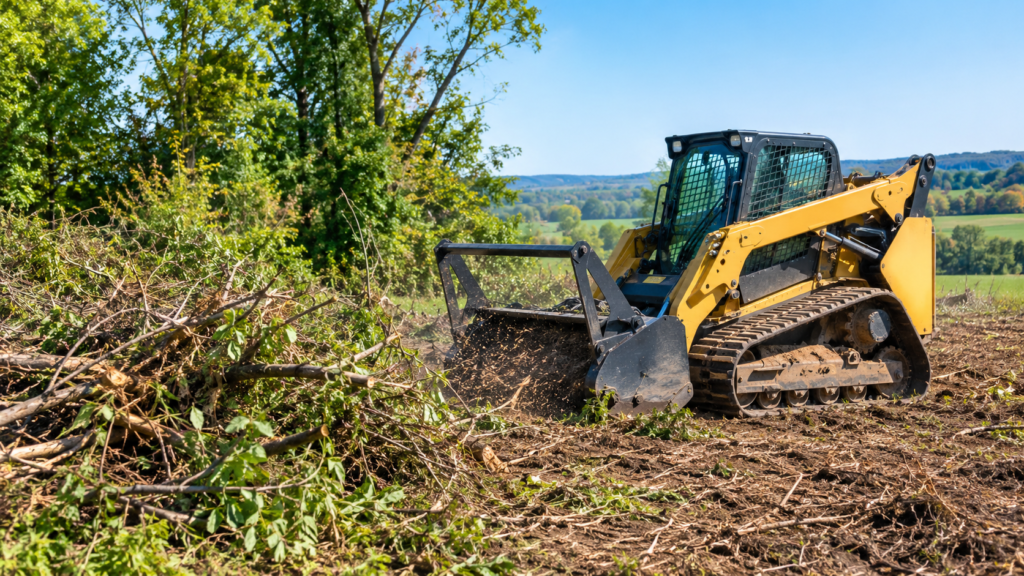
Brush cutters and forestry mulchers handle dense shrub and small tree growth up to six or eight inches in diameter, reducing vegetation to ground level in a single pass. These are the primary tools for large-scale brush and debris removal on Livingston County parcels, efficient on open ground with reasonable access and effective against the multiflora rose and autumn olive that dominate many overgrown Western New York properties.
Skid steers with forestry attachments handle rougher terrain and larger material, combining brush cutting with the ability to push and pile debris. On properties with significant slope or ground irregularity, tracked equipment provides the stability that wheeled units can’t match on uneven terrain.
Chippers process brush and small-diameter wood into mulch that can be spread on site or loaded and removed. For properties where debris removal is part of the scope, a chipper running alongside the clearing crew keeps the job moving rather than creating debris piles that require a separate removal visit.
Larger material: trees above the threshold of brush-cutting equipment, significant stumps, or heavy debris; integrates with tree removal services as part of a comprehensive clearing project. Most complete land clearing jobs involve a combination of brush cutting for dense undergrowth, tree removal for larger specimens, and stump grinding to finish below grade.
Galbraith Tree & Shrub coordinates the full equipment sequence on Geneseo-area clearing projects, matching machinery to what the property actually requires.
Eco-Friendly Disposal of Brush and Debris
Where the material goes after clearing matters, and there are more options than most property owners know about.
On-site chipping and mulching is the most resource-efficient disposal method. Brush run through a chipper produces wood chip mulch that can be spread directly on cleared areas, used in garden beds, or left as a ground cover layer that suppresses regrowth while decomposing and adding organic matter to the soil.
For properties going into naturalized planting or where erosion control is a concern on cleared slopes, on-site mulch use makes practical sense.
Composting facilities accept clean woody debris and process it into soil amendment material. This is appropriate for brush that isn’t suitable for on-site mulching, diseased material, invasive species that could reestablish from cuttings, or volume that simply exceeds what can practically be managed on the property itself.
Burning is permitted in some Livingston County rural areas under specific conditions and with proper notification. Local burn regulations apply and vary by municipality. Confirming what’s permitted before burning is the property owner’s responsibility.
For properties where burning is allowed, it’s an efficient disposal method for large debris volumes on rural parcels where other removal logistics are complicated by access.
Invasive species require specific handling. Multiflora rose, Japanese knotweed, and autumn olive can reestablish from root fragments and cuttings if debris is handled carelessly. These materials need to be chipped thoroughly, composted at facilities reaching temperatures sufficient to kill plant tissue, or disposed of in ways that prevent reinvasion.
Lot clearing in NY involving invasive species is a different disposal conversation than clearing native vegetation; experienced crews know the difference and handle it accordingly.
Brush Removal Pricing in Livingston County
Cost varies based on clearing area size, vegetation density, access conditions, and disposal scope.
Small residential clearing, a rear yard edge or overgrown border on a standard lot, typically runs $300 to $800 for a half-day crew with appropriate equipment. Moderate clearing on a quarter-acre to half-acre overgrown parcel runs $800 to $2,500 depending on vegetation density and debris removal requirements.
Large-scale clearing on multi-acre rural parcels gets quoted by the acre and specific conditions, with pricing varying significantly based on terrain, access, species composition, and equipment requirements.
Additional cost factors worth understanding upfront: stump grinding adds to base clearing costs when stumps need to be addressed below grade. Hauling debris that can’t be chipped on-site adds transport and disposal costs. Invasive species requiring special handling adds labor time compared to equivalent native vegetation clearing.
The only number that actually applies to a specific Livingston County property is one generated from a site walkthrough. Phone estimates on brush clearing are approximations that frequently change once a crew stands in the clearing area and sees what’s actually there.
Brush removal in Geneseo, NY, quotes from Galbraith Tree & Shrub are based on walking the property, identifying vegetation composition, confirming access conditions, and establishing what the cleared result needs to look like before any number gets put on paper.
What to Expect During a Professional Brush Clearing Project
A well-run clearing project follows a clear sequence, and knowing that sequence helps property owners plan around the work.
The project starts with a site walkthrough confirming scope, identifying underground utilities or buried infrastructure in the clearing area, and establishing equipment access routes and debris staging areas. Utility marking through an 811 call is completed before any work involving ground disturbance.
Clearing proceeds systematically from the access point inward. Debris management runs alongside clearing rather than after; brush gets chipped or staged continuously rather than accumulating in the work path.
Larger material comes out as clearing progresses, with stump work integrated into the sequence rather than scheduled as a separate return visit that extends the project timeline.
Final site condition depends on what the property owner needs. Raw cleared ground ready for grading looks different from a cleared area being left to naturalize with seed or ground cover. Confirming the finish expectation before work starts prevents the mismatch between what got done and what the property actually needed.
Getting a Free Brush Removal Quote
Brush removal in Geneseo, NY starts with a site visit, not a phone estimate.
The variables that determine cost- vegetation density, species composition, terrain, access, and disposal scope- can’t be accurately assessed from a description or a satellite image. A crew that quotes without seeing the property is giving you a number that will change once they arrive, which isn’t a useful starting point for planning a project or comparing bids.
Galbraith Tree & Shrub provides free on-site quotes for brush removal and land clearing projects across Geneseo and Livingston County.
The walkthrough takes thirty to sixty minutes, covers the full scope of what clearing involves on that specific property, and produces a written estimate that reflects what the job actually requires.
Calling to schedule a site visit before the next season adds another layer to what’s already there.
Frequently Asked Questions
How do I know if my Geneseo property needs brush removal versus regular mowing?
If vegetation includes woody shrubs, saplings, or invasive species over two feet tall that a standard mower can’t process, brush removal equipment is required. Multiflora rose, autumn olive, and volunteer tree growth all fall outside what lawn maintenance handles. A site walkthrough determines the right clearing approach for your specific property.
Will brush clearing prevent overgrown vegetation from coming back?
Complete clearing that addresses roots through grinding, extraction, or herbicide treatment significantly reduces regrowth. Ongoing management after initial clearing maintains the cleared condition with far less effort than the original project required.
How long does a brush removal project take in Livingston County?
Small residential clearing completes in a half to full day. Moderate rural parcel clearing runs one to three days depending on acreage and vegetation density. Large-scale clearing on multi-acre properties may run several days with full equipment crews. The timeline gets confirmed during the site walkthrough once scope is established.
Does brush removal include stump grinding?
Not automatically. Stump grinding is typically quoted separately and depends on stump count, size, and location. For projects where the cleared area will be graded or developed, grinding to below grade is necessary. For naturalized areas, stumps can sometimes be left to decompose depending on the property owner’s preference and timeline.
What invasive species are most common on overgrown Livingston County properties?
Multiflora rose, autumn olive, Japanese knotweed, and common buckthorn are the most frequently encountered invasive species on Geneseo-area properties.
Do I need a permit for brush removal and land clearing in Geneseo?
Permit requirements depend on scope and location. Clearing near wetlands, waterways, or regulated environmental areas may require DEC review. Standard residential or rural property clearing typically doesn’t require permits, but confirming with the planning office before beginning large-scale clearing is the right first step.
How should I prepare my property before a brush removal crew arrives?
Complete an 811 utility marking call at least three business days before clearing begins. Identify any property features the crew needs to work around, buried infrastructure, irrigation lines, and boundary markers. Confirm equipment access routes and debris staging areas. Clear personal items from the clearing area before the crew arrives.
Keep Reading
More from the blog
Practical guidance on looking after the trees on your property.
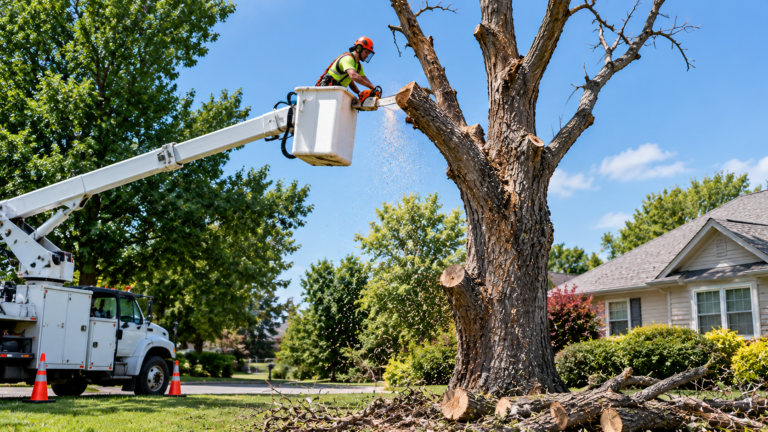
Dead Tree Removal Geneseo: When to Remove & Safety Risks
A dead tree rarely announces itself. One summer the maple by the driveway leafs out late, the next it doesn’t leaf out…
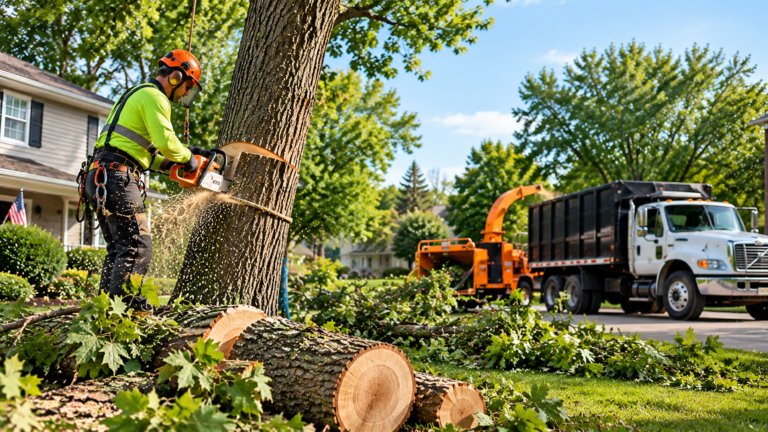
Affordable Tree Removal Near Me: Budget Options Without Compromising Safety
When a tree becomes damaged, diseased, unstable, or simply outgrows its space, removing it may be necessary to protect your property. However,…
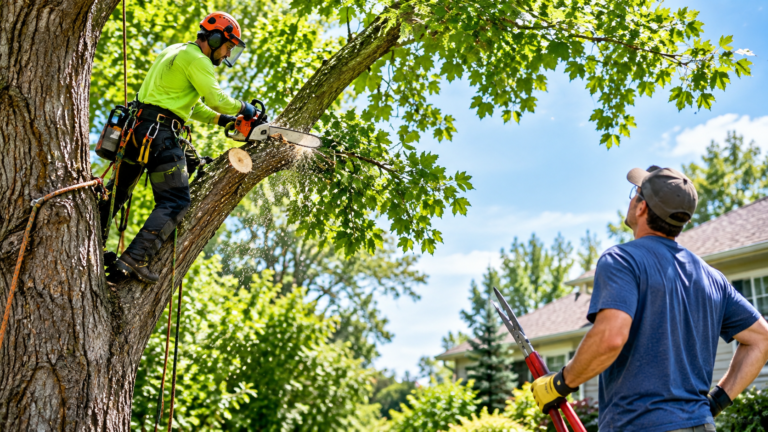
Tree Trimming Company Guide: Certified Arborists vs DIY (Why It Matters)
A branch hangs over your roof, and you wonder if you can handle it yourself. Maybe you can. Plenty of trimming is…