

Expert Arborist in Geneseo, NY: When to Call a Certified Professional
Every fall, somebody in Geneseo calls us about a tree that “looked fine last week.”
That’s usually the moment it wasn’t fine at all. It was just quiet about it. Trees don’t announce trouble the way a leaking roof or a cracked driveway does. A cottonwood can hold a hidden cavity for years before a storm finds it. By the time the damage shows on the surface, the question in front of you usually isn’t “should I trim this?” It’s “is this thing still safe to stand under?”
That’s the gap an expert arborist in Geneseo, NY is trained to close. Knowing when a tree needs a haircut and when it needs a hard decision is most of the job.
What Does an Arborist Actually Do?
People hear “arborist” and picture someone who climbs trees for a living. That’s part of it, sure.
But the climbing is the easy part to explain. An arborist studies tree biology the way a physician studies human biology: how a tree moves water and nutrients, how it responds to injury, how it compensates for damage it can’t repair.
That training shapes every recommendation we make in the field, whether it’s a simple prune or a full tree maintenance services plan for a property with forty mature trees on it. We’re not just cutting branches. We’re reading a living organism and making a judgment call about its future, and about your safety underneath it.
A good arborist also knows when not to cut. Sometimes the right answer is a cable system to support a weak union. Sometimes it’s adjusting the mulch and watering schedule and leaving the saw in the truck.
Homeowners in Geneseo often assume tree service means removal, and that’s a fair assumption given how many companies advertise that way. In practice, most calls we get end without a single tree coming down.
A tree service in Geneseo, NY, property owners can rely on should be just as comfortable recommending nothing as it is recommending a full job. That’s not a sales pitch. It’s just what the tree actually needs, and saying otherwise would be a disservice to the person paying for the visit.
ISA Certification: Why It Matters
Anybody can buy a chainsaw and call themselves a tree guy. Not everybody can pass the International Society of Arboriculture exam.
Being ISA certified means a person has demonstrated working knowledge of tree biology, pruning standards, risk assessment, and safe work practices, and keeps that knowledge current through continuing education.
It’s the closest thing our industry has to a licensing board. When you’re comparing an arborist NY homeowners can trust against someone who just showed up with a truck and a ladder, the certification is the difference you can actually verify. You can look up the credential. You can’t look up a stranger’s judgment.
It also matters for liability. If a tree on your property fails and causes damage, insurance carriers and attorneys want to know whether the work leading up to that failure was done to a recognized standard. Certification is part of that record.
Diagnosing Tree Disease, Pests, and Structural Failure
This is where the real skill shows up, and it’s rarely obvious from the ground.
Tree health diagnosis starts with pattern recognition built over years, not a single visual scan. Dieback in the upper canopy might mean root stress from last summer’s drought, or it might mean a fungal pathogen working through the vascular system.
Emerald ash borer has been moving through this part of New York for over a decade, and by the time you see D-shaped exit holes in the bark, the tree has often already lost more structural integrity than it looks like from the driveway. Woodpecker activity, thinning foliage, and bark that sloughs off in sheets are all clues we read together, not in isolation.
Structural failure is its own category of concern. A codominant stem with included bark, a cavity at the base, a lean that’s gotten worse since last year. Any one of these can turn a routine storm into an emergency call.
Diagnosing which trees are actually at risk, versus which ones just look a little rough, is the difference between a targeted removal and a yard full of trees cut down out of caution nobody could confirm.
We’ve walked properties where three different opinions existed on the same tree before we got there. One said take it down. One said it was fine. The truth usually sits somewhere in between, and getting to it means checking soil moisture, root flare condition, and canopy density together instead of forming an opinion from the driveway.
Arborist Reports for Legal and Insurance Purposes
Sometimes the client isn’t just a homeowner worried about a tree. It’s a homeowner worried about a lawsuit, or an insurance claim, or a property line dispute with a neighbor.
A written arborist report documents the condition of a tree at a specific point in time: species, size, health, structural defects, and a professional risk rating. Insurance adjusters use these reports to determine whether a tree failure was foreseeable or truly an act of nature.
Real estate transactions sometimes require one before closing, especially when a large tree sits near a driveway, a shared fence line, or a neighboring structure. Courts have relied on documented arborist assessments to settle disputes over damage, encroachment, and negligence claims.
This kind of documentation only carries weight when it’s produced by someone with the training to back it up, which is another reason the certification question isn’t just a nice-to-have.
How Galbraith’s Arborists Approach Complex Jobs
Not every job is a straightforward prune-and-go. Some properties come with history: old storm damage, a tree that’s been “watched” for three years by three different companies, a commercial site where a failure means more than a bad afternoon.
Galbraith Tree & Shrub sends a certified arborist to walk the property before any equipment shows up, because a plan built without seeing the root flare, the soil compaction, and the surrounding structures is really just a guess.
On complex jobs, that walkthrough might mean climbing to inspect a suspected cavity firsthand rather than assuming from binoculars on the ground. It might mean coordinating a crane for a removal near power lines, or timing a commercial tree service Geneseo, NY property needs around business hours so a job doesn’t disrupt customers.
The goal on every job, residential or commercial, is the same: know exactly what you’re dealing with before you make an irreversible decision about it.
Tree Preservation vs. Removal Decisions
Removal is permanent. That alone should slow everybody down before pulling the trigger on it.
A tree that’s structurally compromised in one section isn’t automatically a tree that needs to come down entirely. Sometimes crown reduction, cabling, or removing a single failing leader saves the tree and the safety concern both.
Other times, the decay has traveled far enough into the trunk or root system that no amount of pruning changes the outcome, and preservation would just be delaying an outcome that’s already decided.
The honest answer depends on species, location, decay extent, and what’s standing underneath the canopy if it fails: a garage, a play set, a power line, or nothing at all.
We’d rather tell a homeowner their tree can be saved with the right care plan than talk them into a removal they didn’t need. We’d also rather tell them the hard truth early than let a bad tree sit through another storm season on hope alone.
Request a Certified Arborist Consultation in Geneseo
If you’ve got a tree that’s got you wondering, that’s reason enough to have it looked at. You don’t need a storm to justify a second opinion.
Galbraith Tree & Shrub offers on-site consultations across Geneseo, Avon, Dansville, Mt. Morris, Lakeville, Livonia, and Nunda, and the visit itself is straightforward: a certified arborist walks the property, looks at what’s actually going on above and below ground, and gives you a plain answer about what it needs, if anything.
Give us a call, and we’ll get someone out to take a look.
Frequently Asked Questions
How do I know if I need an arborist instead of a regular tree service?
If a tree looks unhealthy, has visible decay, or you need documentation for insurance or a property dispute, you need a certified arborist. Routine trimming or removal with no health concerns can often be handled by a general tree service crew.
What’s the difference between an arborist and a tree trimmer?
A tree trimmer focuses on cutting and shaping. An arborist is trained in tree biology, disease diagnosis, and risk assessment and uses that training to decide what work, if any, a tree actually needs before cutting begins.
How often should a mature tree be inspected?
Most healthy mature trees benefit from a professional look every two to three years. Trees near your house, driveway, or property line, or ones showing stress, should be checked annually or after any major storm.
Can a diseased tree be saved, or does it need to come down?
It depends on the disease, how far it’s progressed, and the tree’s location. Early-stage issues are often treatable. Advanced decay or vascular disease affecting the trunk usually means removal is the safer long-term option.
Do I need an arborist report for an insurance claim?
Often, yes. If a tree fails and causes property damage, insurers frequently want documentation showing the tree’s condition and whether the failure was foreseeable. A written report from a certified arborist carries more weight than a verbal opinion.
What should I ask before hiring someone for tree work?
Ask if they’re ISA certified, insured, and willing to explain their reasoning, not just their price. A qualified arborist should be able to tell you why a tree needs the specific work they’re recommending.
Is a consultation different from a regular estimate?
Yes. An estimate usually just prices out work you’ve already requested. A consultation involves an arborist assessing the tree’s actual health and structure first, then recommending what’s needed, which may be less than you expected.
Keep Reading
More from the blog
Practical guidance on looking after the trees on your property.
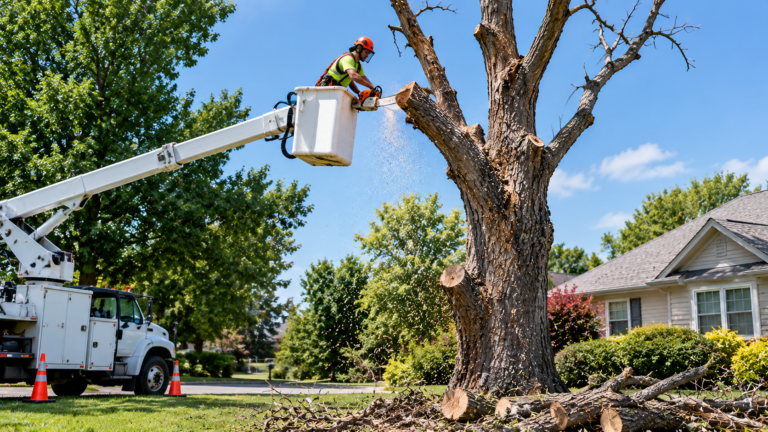
Dead Tree Removal Geneseo: When to Remove & Safety Risks
A dead tree rarely announces itself. One summer the maple by the driveway leafs out late, the next it doesn’t leaf out…
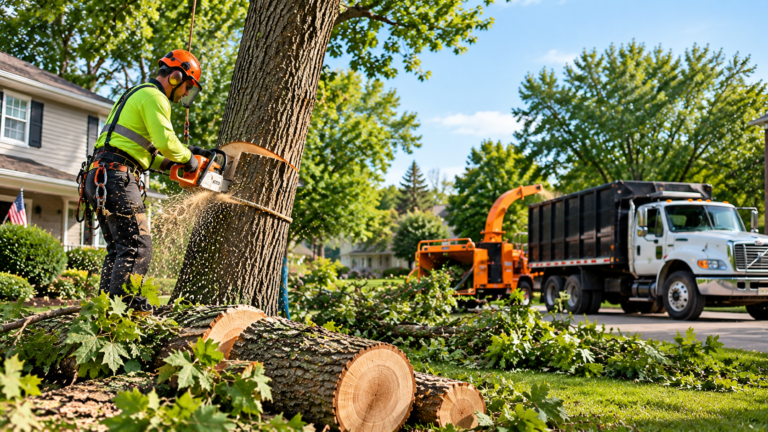
Affordable Tree Removal Near Me: Budget Options Without Compromising Safety
When a tree becomes damaged, diseased, unstable, or simply outgrows its space, removing it may be necessary to protect your property. However,…
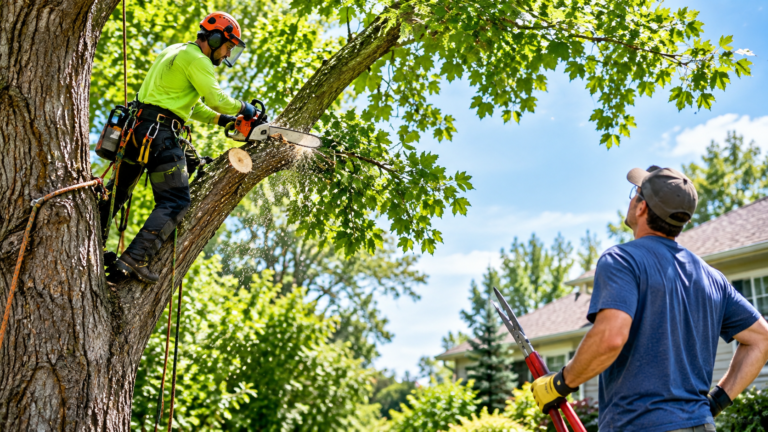
Tree Trimming Company Guide: Certified Arborists vs DIY (Why It Matters)
A branch hangs over your roof, and you wonder if you can handle it yourself. Maybe you can. Plenty of trimming is…