

Dead Tree Removal in Geneseo, NY: Why Acting Fast Protects Your Property
You can hear a dead tree before you can prove it.
No leaves rustling, no birds working the branches, just a hollow kind of quiet where a living tree used to be. We’ve walked up on hundreds of them over the years, and that silence is usually the first clue something’s wrong long before a homeowner ever calls.
Most people don’t set out to ignore a dying tree. They just don’t know what they’re looking at. A tree can stand bare through most of a season and still get written off as “resting” or “just an odd year.”
Meanwhile, the wood underneath is drying out, the root system is losing its grip, and every windy afternoon becomes a small gamble with your roof, your fence, or your kid’s swing set.
Dead tree removal in Geneseo, NY isn’t something the crew at Galbraith pushes because it’s good for business. It’s something we push because we’ve cleaned up too many yards after the tree didn’t wait for anyone’s convenience.
How to Tell If Your Tree Is Actually Dead
There’s a quick test old-timers use, and it still works. Scratch a small patch of bark on a branch with your thumbnail or a pocketknife. Green underneath means the tree, or at least that limb, is still alive. Brown, dry, and brittle underneath is a different story.
Beyond the scratch test, look for the whole picture. A dead tree often loses bark in sheets, especially lower on the trunk, exposing gray or crumbly wood underneath. Branches snap clean and dry instead of bending, and you won’t see any new growth at the tips come spring.
Fungus at the base, especially shelf-like conks, signals internal decay that’s been working for years, not weeks. Woodpecker holes clustered in one area usually mean the birds found something worth digging for, and that’s often insect activity in dead wood. These tree disease and decay signs rarely show up alone, so spotting two or three at once is worth a closer look.
I’ve had folks tell me a tree “still has some green up top,” and sure enough, one or two branches were hanging on while the rest of the tree was already gone.
A partially dead tree carries its own risks and its own decisions, which is exactly why a proper look from someone who does this daily matters more than a guess from the driveway.
Why Dead Trees Fall Without Warning
Here’s the part that catches people off guard. A dead tree doesn’t creak and lean for weeks like in the movies. It can stand perfectly straight, looking almost normal, right up until the moment it doesn’t.
Living trees flex in the wind because the wood still has moisture and elasticity. Dead wood loses both. It gets brittle, and brittle wood doesn’t bend under pressure; it breaks. Add in root decay you can’t see from the surface, and you’ve got a tree that’s essentially balancing on borrowed time, waiting for the wrong gust or a heavy wet snow to tip the scale.
That’s the whole reason dangerous tree removal Geneseo homeowners deal with tends to come up suddenly, usually after a storm, when a tree that looked fine the week before is suddenly leaning over a driveway or resting on a shed roof.
We treat these calls differently than routine trimming work. When there’s a real chance of a trunk coming down on a structure, a fence line, or anywhere people walk, that’s when emergency tree removal near me searches spike, and for good reason. Timing matters as much as the removal itself.
Insurance Implications of a Neglected Dead Tree
This is the part nobody wants to think about until it’s too late, but it matters. If a dead tree falls and damages your house, your neighbor’s fence, or a parked car, your insurance company is going to ask one question first: did you know the tree was dead?
If there’s documentation showing the tree was visibly dead or hazardous before it fell, some insurers treat the damage as a maintenance issue rather than a covered loss. That can mean a denied claim right when you need the coverage most.
Getting ahead of it with a dead tree hazard assessment gives you a paper trail showing you acted responsibly.
I’m not a lawyer and won’t pretend to know your specific policy. What we can tell you is that every adjuster we’ve dealt with treats a documented, proactive removal more favorably than an “I meant to get to it” situation.
Steps We Take to Safely Remove a Dead Tree
Removing a live, healthy tree and removing a dead one are not the same job, even though they might look similar from the street. Dead wood is unpredictable. It can shatter instead of cutting cleanly, and you never fully know how compromised the interior is until you’re already into it.
We start with a ground-level and sometimes aerial inspection to figure out the lean, the decay pattern, and what’s around the tree that needs protecting.
From there, we plan the drop zone, rig ropes where needed to control direction, and section the tree down in manageable pieces rather than felling the whole thing at once, especially in tight yards or near power lines.
Every cut gets reassessed as we go, because dead wood can surprise you halfway through a limb. We keep a clear work zone the entire time, and nobody steps into it without eyes on the whole tree. Once the trunk and major limbs are down, we grind the stump if that’s part of the job and clean the site so it looks like we were never there, aside from one less tree.
This deliberate, cut-by-cut approach is standard tree removal Geneseo homeowners can expect from a crew that’s done this more times than we can count.
What to Do With the Wood From a Dead Tree
Most homeowners don’t realize a dead tree is still worth something. Depending on the species and how far along the decay is, the wood can go a few different directions.
Hardwoods like oak, maple, and hickory often split fine for firewood, even from a dead tree, as long as the rot hasn’t gone too deep. Softer or more decayed wood usually isn’t worth the effort and gets chipped instead, which makes decent mulch for garden beds.
Larger sections sometimes go to a sawmill if the trunk is straight and thick enough to be worth milling into lumber. We’ll walk you through what your specific tree is good for before we haul anything away, since some folks want the firewood and others just want it gone.
There’s no wrong answer here; it really just comes down to what you want to do with your property afterward.
Replanting Options After Dead Tree Removal
An empty spot in the yard feels strange for a while, but it’s also a chance to plant something better suited to where you live. Not every species does well in every yard, and sometimes the tree that died was fighting a losing battle with its location from the start.
Native species tend to handle our winters and soil better than ornamental varieties shipped in from warmer climates. We can talk through sun exposure, soil drainage, and how close the new tree will be to your house, since a lot of dead tree situations start with poor placement decades earlier.
Fast-growing options exist if you want shade sooner, though they trade some longevity for speed. Slower hardwoods take patience but tend to outlast the people who planted them. Matching the right tree to the right spot now saves you this same conversation in twenty years.
Replanting isn’t required, and plenty of homeowners are happy with the open space. But if you want a tree back in that spot, we’re glad to help you pick one that’ll actually thrive there.
Contact Galbraith for a Free Dead Tree Inspection
If you’ve got a tree that looks off, or you’ve caught yourself avoiding that side of the yard because you’re not sure it’s safe, trust that instinct. Galbraith Tree & Shrub offers a free dead tree inspection for homeowners across Geneseo and the surrounding area, no pressure and no obligation attached to it.
We’ll walk the property, check the bark, the canopy, the base, and give you a straight answer about what’s going on. If it needs to come down, we’ll explain why and what that process looks like for your specific tree. If it doesn’t, we’ll tell you that too.
Give us a call, and let’s figure out what that tree needs before it makes the decision for you.
Frequently Asked Questions
How much does dead tree removal cost in Geneseo, NY?
Cost depends on the tree’s size, location, and how close it is to structures or power lines. A small backyard tree costs less than a large one hanging over a house. We provide a written estimate after seeing the tree in person, so you know exactly what you’re paying for.
How long does it take to remove a dead tree?
Most residential removals take a few hours to a full day, depending on size and access. Trees near power lines, fences, or tight spaces take longer because of the extra rigging and care involved. We’ll give you a realistic timeframe during the initial visit.
Can I remove a dead tree myself?
We wouldn’t recommend it unless it’s very small and far from anything valuable. Dead wood behaves unpredictably under a chainsaw, and the weight distribution changes as you cut. Most DIY tree accidents involve exactly this kind of job.
Do dead trees attract pests to my property?
Yes, decaying wood is an open invitation for carpenter ants, termites, and various beetles. Those pests don’t always stay contained to the dead tree either. Removing it promptly reduces the chance they spread to healthy trees or your home’s structure.
Is a leaning dead tree an emergency?
A lean that’s new or worsening should be treated as urgent, especially near a house, driveway, or where people walk. Call right away rather than waiting to see what happens. We prioritize these calls because the risk window can close fast.
Will removing a dead tree damage my lawn?
Some disruption is normal, particularly near the stump area, but a careful crew keeps it minimal. We use mats and planned drop zones to protect grass and nearby plantings. Any minor turf damage typically recovers within a season.
Does homeowners’ insurance cover dead tree removal?
It depends on your policy and whether the tree has already caused damage. Preventative removal is often the homeowner’s cost, while removal after storm damage may be covered. We recommend checking with your provider and keeping our inspection report on hand.
Keep Reading
More from the blog
Practical guidance on looking after the trees on your property.
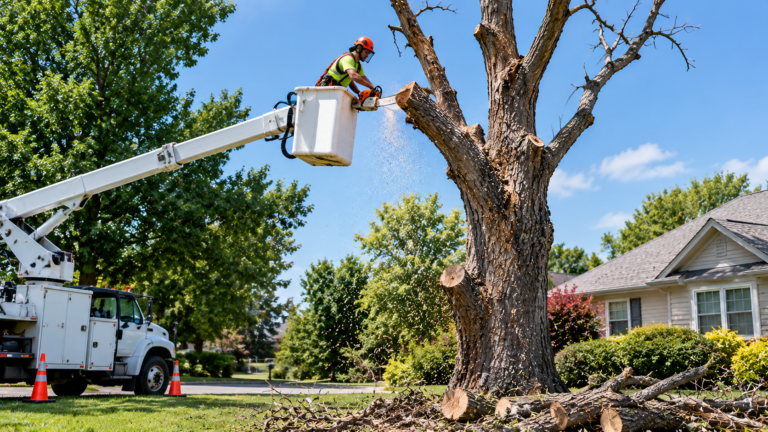
Dead Tree Removal Geneseo: When to Remove & Safety Risks
A dead tree rarely announces itself. One summer the maple by the driveway leafs out late, the next it doesn’t leaf out…
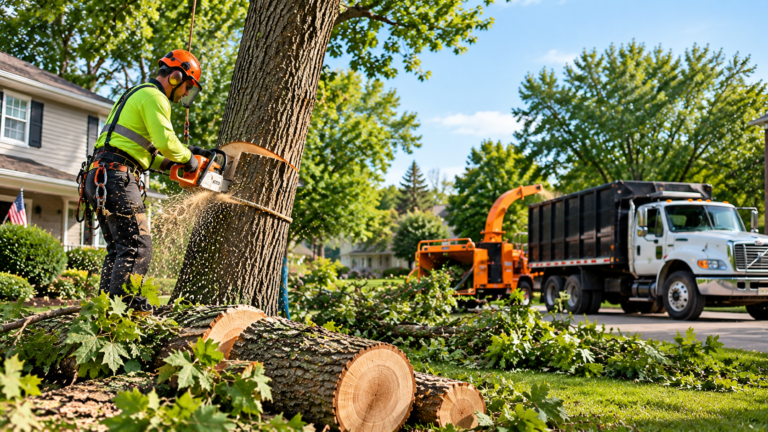
Affordable Tree Removal Near Me: Budget Options Without Compromising Safety
When a tree becomes damaged, diseased, unstable, or simply outgrows its space, removing it may be necessary to protect your property. However,…
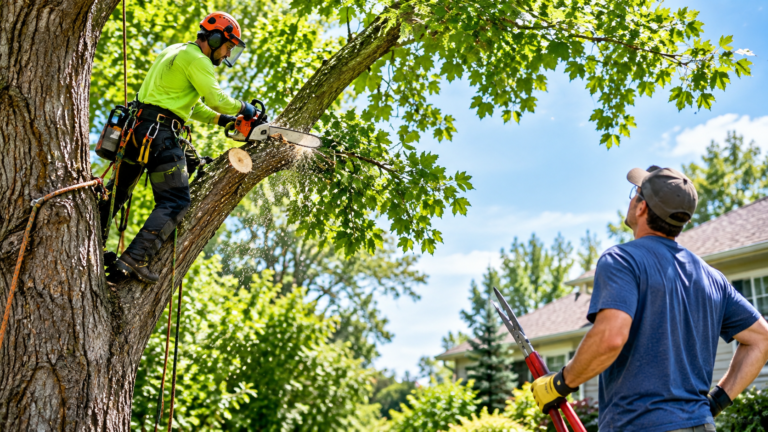
Tree Trimming Company Guide: Certified Arborists vs DIY (Why It Matters)
A branch hangs over your roof, and you wonder if you can handle it yourself. Maybe you can. Plenty of trimming is…