Tree Removal Near Me: Find & Hire the Right Local Company Fast
A big tree coming down in your yard is never a small decision. Maybe it’s leaning toward the house after a storm. Maybe it’s been dying slowly for two summers, and you’re tired of watching branches drop. Whatever the reason, when you search “tree removal near me,” you’re usually not browsing; you’re trying to solve a problem fast, and you want someone trustworthy handling it.
That’s the situation we see most often at Galbraith Tree & Shrub. Homeowners calling us aren’t shopping for fun. They’ve got a real tree, a real safety concern, and they want straight answers about what it’ll take to handle it right.
So let’s walk through what actually matters when you’re searching for tree removal near me, and how to tell a solid local company from one you should skip.
Why Local Matters More Than People Realize
Tree removal isn’t a one-size-fits-all job. A company working in Buffalo needs to understand our specific tree species, our soil, our storm patterns, and our winters. Ice storms here put very different stress on a tree than what you’d see in a warmer climate.
A crew that only works out of a different region might not know how a Buffalo winter affects root stability or how heavy, wet snow changes the risk calculation on a leaning tree.
Local companies also tend to know the permitting situation in your specific municipality, which varies more than people expect. Some areas require a permit for removing a tree over a certain size, especially near property lines or protected zones. A company that works your area regularly already knows this. One that doesn’t may cost you a delay, or worse, a fine.
What “Tree Removal Near Me” Searches Usually Mean
When homeowners search tree removal near me, they’re typically looking for one of a few things: an emergency situation, a routine removal they’ve been putting off, or general research before a bigger yard project. The urgency behind the search matters, because it changes what “the right company” looks like.
If a tree just came down in a storm and it’s resting on your roof or blocking your driveway, you need tree removal services near me that can respond same-day or next-day, with proper insurance and equipment for storm work.
If you’re dealing with a slow-dying maple that’s been on your mind for two years, you’ve got more time to get quotes, check reviews, and ask questions. Both are legitimate reasons to search, but they call for different levels of urgency in who you call first.
Signs a Tree Actually Needs to Come Down
Not every problem tree needs full removal; sometimes pruning or cabling solves it. But there are signs that generally point toward removal being the safer call. Large dead branches throughout the canopy, deep vertical cracks in the trunk, fungus growing at the base (which often signals root decay), and a significant lean that’s gotten worse over time are all red flags worth taking seriously.
Another one people miss: if a tree has lost more than 50% of its structure or root system to damage or disease, saving it usually isn’t practical, and removal becomes the responsible choice, especially if it’s near a house, driveway, or power line.
A tree that looks fine from a distance can still have serious internal decay, which is part of why a trained eye matters here, not just a guess from the sidewalk.
What a Certified Arborist Actually Brings to the Job
You’ll see the term “certified arborist” come up a lot, and it’s not just a title for a resume. A certified arborist has gone through training and testing on tree biology, structural risk assessment, and proper removal techniques. That matters because deciding whether a tree needs to come down, versus being treated or pruned, isn’t always obvious, and a wrong call in either direction can be expensive or dangerous.
When you’re comparing a certified arborist Geneseo homeowners might find versus a general landscaping crew that also does tree work, there’s a real difference in judgment, not just equipment.
An arborist can often tell you whether a tree is salvageable, which can save you the cost of removal altogether. A company with no formal arborist on staff may default to “just take it down” because that’s the service they know how to sell, whether it’s the right answer or not.
What to Ask Before Hiring Any Tree Removal Company
A reputable tree removal company should be able to answer a few basic questions without hesitation. Are you licensed and insured, including liability coverage for property damage? Who’s actually doing the climbing and cutting, employees or subcontractors? What happens to the debris and stump? Is removal included or extra?
It’s also fair to ask how they assess risk before starting a job near a house or power line. A company with real experience will talk you through their plan, where the tree is expected to fall, how they’re protecting nearby structures, whether they’re using a crane or doing a controlled sectional removal. If someone can’t explain their approach in plain terms, that’s worth noting.
Understanding Cost Without Getting Overwhelmed
Tree removal pricing depends on size, location, condition, and accessibility. A small, easily accessible tree in an open yard costs far less than a large tree leaning over a roof or tangled near power lines. Stump grinding and debris hauling are often separate line items, so it’s worth asking whether a quote includes them or not before comparing prices between companies.
Be cautious of a quote that comes in dramatically lower than everyone else’s. Tree removal is genuinely dangerous work requiring insurance, trained crews, and proper equipment, and all of that costs money.
A price that seems too good is sometimes a sign of missing insurance or inexperienced crews, and that risk usually lands on the homeowner if something goes wrong on your property.
The Legal Side, Briefly
Property lines matter. If a tree sits on or near a boundary line, you may need your neighbor’s agreement before removal, and local ordinances can require permits for certain tree sizes or protected species. Utility companies must be contacted before work near power lines. When in doubt, check with your municipality or an arborist before cutting.
What Happens During a Typical Removal
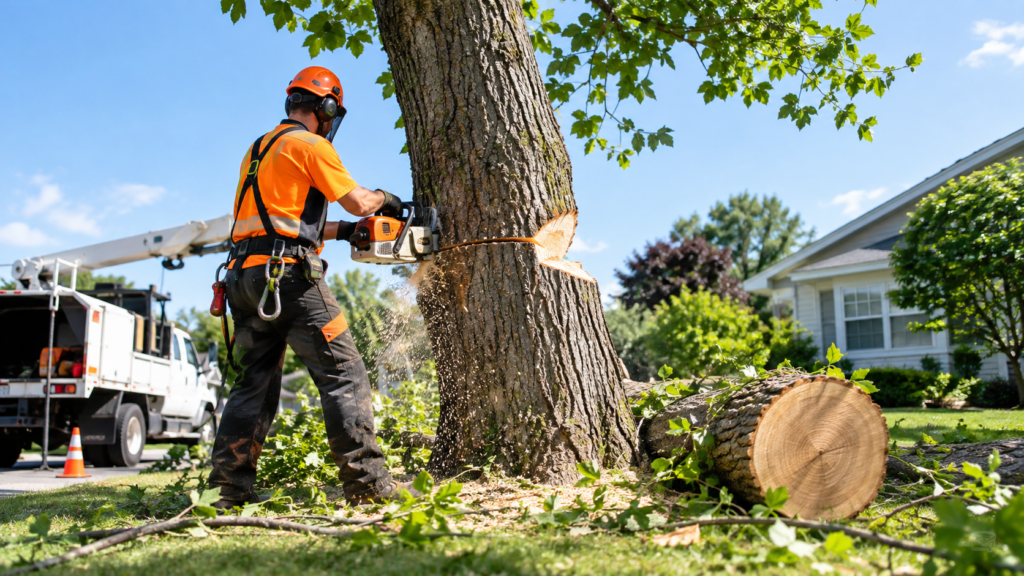
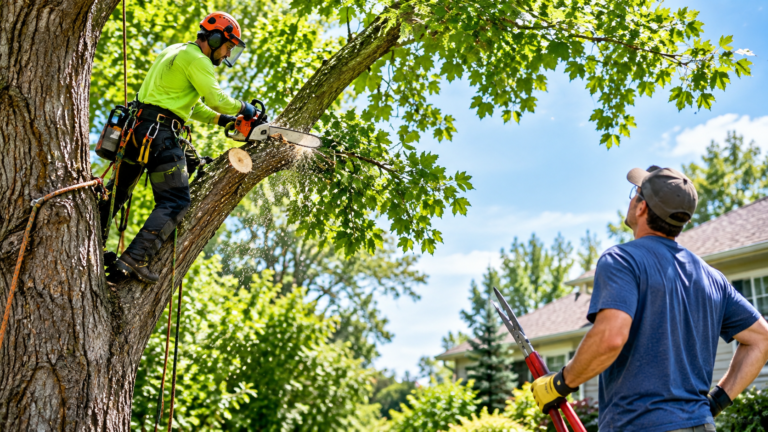
For most residential jobs, a crew arrives, assesses the tree and surrounding area, sets up safety zones, and either fells the tree in sections (common near structures) or as a whole in open space. Stump grinding, if included, usually happens the same day or shortly after. Cleanup and debris hauling typically wrap up the job, leaving the area reasonably clear.
Finding the Right Fit, Not Just the Fastest One
When you’re searching tree removal near me, speed matters, but fit matters more. The right company for a leaning oak threatening your roof during a storm might be different from the right company for a routine removal you can schedule three weeks out. Take the extra few minutes to check reviews, confirm insurance, and ask about their actual process, not just their price.
If you are searching for the best tree service Geneseo, NY, and the surrounding Livingston County area has to offer, Galbraith Tree & Shrub brings the local experience, certified expertise, and proper equipment to get it done safely. A careful assessment upfront saves homeowners money and stress later
A little bit of due diligence before hiring goes a long way toward making sure the job gets done safely and correctly the first time.
Frequently Asked Questions
How much does tree removal typically cost?
Cost varies widely based on tree size, location, and accessibility. Small trees in open areas cost less than large trees near structures or power lines. Get a written quote specifying what’s included, like stump grinding and cleanup.
Do I need a permit to remove a tree on my property?
Sometimes. Many municipalities require permits for larger trees or those near property lines and protected areas. Requirements vary by location, so check with your local government or ask your tree company before work begins.
How do I know if a tree is dead or just dormant?
A simple scratch test on a small branch helps; green underneath usually means it’s alive, brown means it’s likely dead. Persistent leaf loss, brittle branches, and fungus at the base are also warning signs.
Is stump grinding included in tree removal?
Not always. Many companies price it separately from the removal itself. Always confirm upfront whether your quote includes stump grinding, or you may be surprised by an added cost after the tree is already down.
Can I remove a tree myself instead of hiring someone?
Small trees away from structures might be manageable, but large trees, especially near houses or power lines, involve real safety risks. Professional equipment, training, and insurance exist for a reason in this line of work.
What happens if a tree removal damages my neighbor’s property?
A properly insured company carries liability coverage for exactly this situation. Always confirm insurance before hiring, and clarify who’s responsible for any accidental damage before work starts, not after.
How quickly can a company respond to a storm-damaged tree?
Many local companies offer same-day or next-day emergency response for hazardous situations, like a tree resting on a structure or blocking access. Response time often depends on current storm demand in your area.
Keep Reading
More from the blog
Practical guidance on looking after the trees on your property.
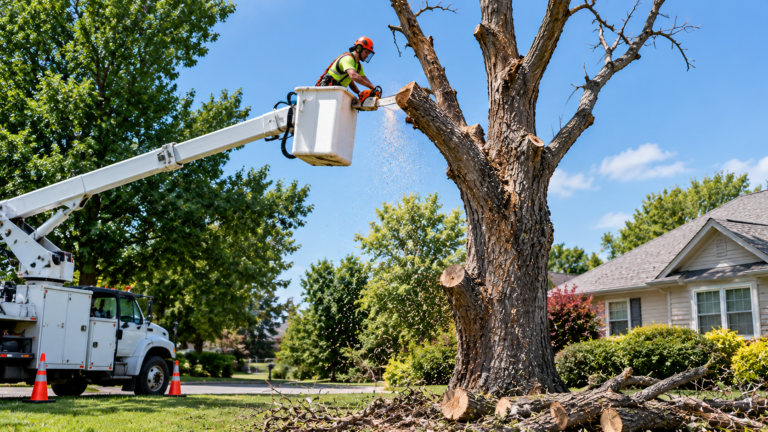
Dead Tree Removal Geneseo: When to Remove & Safety Risks
A dead tree rarely announces itself. One summer the maple by the driveway leafs out late, the next it doesn’t leaf out…
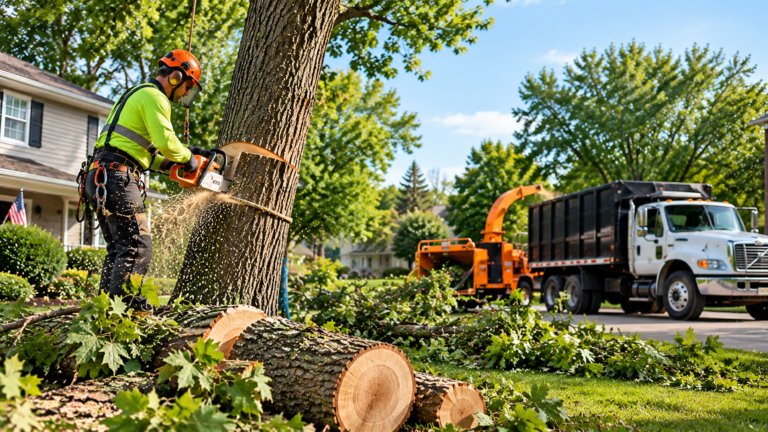
Affordable Tree Removal Near Me: Budget Options Without Compromising Safety
When a tree becomes damaged, diseased, unstable, or simply outgrows its space, removing it may be necessary to protect your property. However,…
Tree Trimming Company Guide: Certified Arborists vs DIY (Why It Matters)
A branch hangs over your roof, and you wonder if you can handle it yourself. Maybe you can. Plenty of trimming is…