
Tree Stump Removal: 5 Methods Compared Which Is Best?
A stump looks harmless until you try to mow around it.
Then it’s the thing you trip over, the spot where grass won’t grow, and the reason the yard never quite looks finished. Tree stump removal is one of those jobs most homeowners put off for years, and that’s understandable, because there are several ways to do it and they don’t all suit the same yard. Here in Geneseo and across the Genesee Valley, we hear the same questions again and again.
This guide comes from the crew at Galbraith Tree & Shrub. We’ve spent plenty of time on stumps of every size, from small ornamentals to old maples that outlived the houses around them. Below, we compare five methods honestly, including the ones you can do yourself.
Why Stumps Are Worth Dealing With
Leaving a stump in place isn’t just an eyesore. Stumps can attract carpenter ants and termites, and some species will keep sending up suckers from the roots for years. They also make mowing and landscaping harder, and they can become a trip hazard, especially for kids.
That said, not every stump has to go right away. If it’s tucked in a back corner and causes no trouble, waiting is fine. The choice comes down to how soon you want it gone, your budget, and what you plan to put in that spot.
Method 1: Stump Grinding
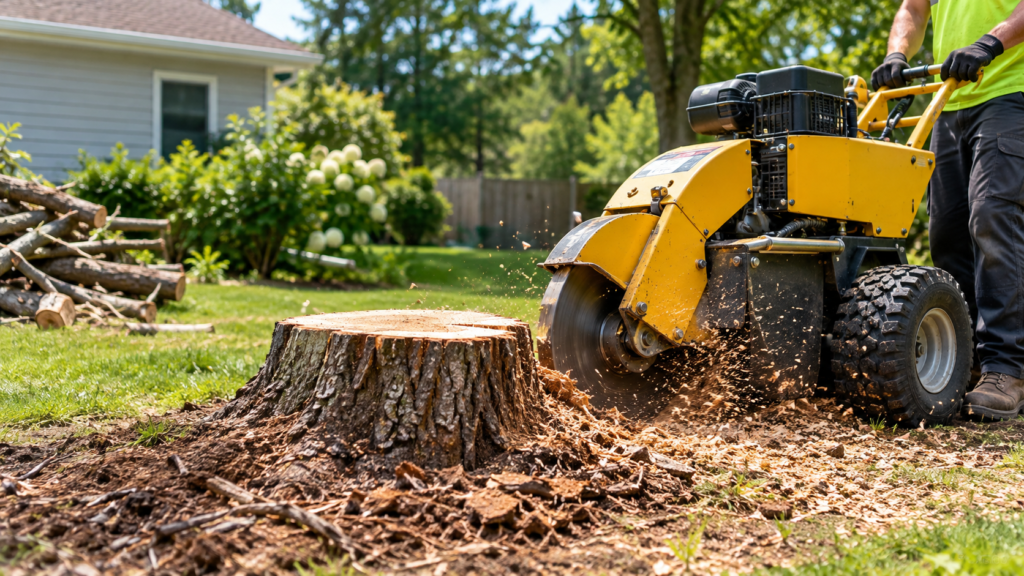
Stump grinding is the method we recommend most often. A grinder uses a spinning cutting wheel with carbide teeth to chip the stump into mulch-sized pieces, usually to a depth of several inches below the ground. Most stumps take under an hour, though large ones with wide root flare can take longer.
The upsides are speed and a clean result. You can typically replant grass or lay sod soon after. The downsides are that roots deeper in the ground stay put, and the grinder leaves a pile of wood chips that has to be dealt with. Costs are usually based on stump diameter, so a small stump is far cheaper than a big one.
If you’re searching for stump grinding services, ask a few practical questions. Do they carry liability insurance? Do they mark and avoid buried lines? Will they haul the chips, or leave them? A reputable company will answer plainly.
Homeowners also ask about affordable stump grinding in Geneseo, and the best way to keep costs reasonable is to have several stumps ground in one visit, since crews can move from one to the next without extra setup.
Method 2: Full Stump Extraction
Extraction means pulling the stump out whole, roots and all, usually with an excavator or a large piece of equipment. It leaves a big hole, and it can disturb the lawn, sidewalks, and nearby plants.
This method makes sense when you’re pouring a foundation, building a patio, or installing a septic system, where leftover roots would cause problems later. It’s also the answer when a tree died from a root disease, and you want the infected wood gone.
For an ordinary lawn, it’s usually more than you need. It costs more than grinding, requires room for the machine, and leaves a lot of soil to fill and regrade.
Method 3: Chemical Stump Removers
Chemical removers, often sold as potassium nitrate, speed up natural rot. You drill holes into the stump, pour in the product, add water, and wait. Follow the label carefully, and keep pets and children away.
The catch is time. Even with the product, a large stump may take several months to a couple of years to soften enough to break up. Some people then finish the job with an axe or a spade. It’s cheap and needs almost no equipment, but it’s slow, and it isn’t a good fit when you want the space usable soon.
Don’t use it near a vegetable garden, and don’t confuse it with products that claim to burn a stump out. Those come with their own risks.
Method 4: Burning
Burning a stump sounds simple, and people have tried it for generations. We’d steer most homeowners away from it. Open burning is restricted in many places, including parts of New York, so check the state and local rules before you even think about lighting a fire.
Stumps can also smolder underground along the roots for days, which is a fire risk near fences, structures, and dry grass.
For most homeowners, burning isn’t worth the risk or hassle. Rules vary by location, and burning a stump can leave hot material underground that continues to smolder. Grinding or extraction is usually a safer and more predictable choice.
Method 5: Letting It Rot Naturally
Doing nothing is a real option, and it costs nothing. Wood breaks down on its own through fungi and insects, and you can help it along by keeping the stump moist and adding some nitrogen. Cutting the stump as low as possible also helps.
The trade-off is patience. A large hardwood stump can take many years to break down, and the tree may keep sprouting until the roots run out of energy. You can cover the stump with a planter or a mulched bed in the meantime, which makes it look intentional. This works best for people who aren’t in a hurry.
Which Method Is Best?
There isn’t one right answer, but here’s how we’d sort it out.
If you want the stump gone quickly with the least mess, grinding is usually the best fit. If you’re building on the spot, extraction is safer. If you have time and a small budget, chemical treatment or natural rot can work. Burning is the one we’d avoid unless conditions are right and rules allow it.
Think about size too. A 6-inch stump and a 36-inch stump are very different jobs. Larger stumps cost more and take more time with any method, and older stumps that have already started to rot are often easier to grind.
Before Any Work Starts
Call 811 before any digging or stump work that could disturb the soil. It’s a free way to have underground utilities marked before equipment goes into the ground.
Also clear the area of rocks, and mention any hidden objects to your crew. Old fence wire, nails, and stones are common inside stumps and roots. They can damage a grinder and throw debris. If a stump sits near a driveway, fence, or a neighbor’s property, point out the boundaries so nothing gets hit.
What to Do After Stump Removal
People often ask what to do after stump removal, and it depends on how you removed it.
After grinding, you’ll have a mound of wood chips and a shallow depression. You can haul the chips off or use some as mulch around other plants. Fresh chips pull nitrogen from the soil as they break down, so don’t mix a lot into the ground where you plan to grow grass or flowers. Instead, remove most of the chips, fill the hole with good topsoil, and tamp it down.
Add a little extra soil, because it will settle over the first season. Then seed or lay sod. Fall is a good time for grass seed in our area, and spring works too. Keep the new patch watered until it’s established.
If you removed the whole stump, fill the hole in layers, compacting each one so it doesn’t sink later. For a garden bed, mix in compost. For a patio or structure, follow your builder’s advice on compaction.
Watch the spot for a season. If sprouts appear from leftover roots, cut them back or pull them out. If sprouts appear, cut them back promptly and monitor the area. Persistent regrowth may require additional treatment or removal of remaining roots.
Choosing Someone to Do the Work
Hiring out is worth it for larger stumps or tight spots. Get at least two or three written quotes and compare what they include. Ask whether the price covers chip removal, cleanup, and fill dirt, since those details change the total. Confirm they have insurance and ask for proof.
If you’re gathering quotes, the team at Galbraith Tree & Shrub is glad to look at a stump in person and give you a straight answer, even if that answer is that you can handle it yourself.
A local crew also knows the soil and the tree species common around Geneseo, which helps with realistic timing and cost.
Frequently Asked Questions
How much does tree stump removal cost?
Most companies price by stump diameter, plus any extras like chip removal or travel. Small stumps cost far less than large ones. Getting two or three written quotes is the best way to see what fits your yard.
Is stump grinding better than removing the whole stump?
For most lawns, yes. Grinding is faster, cheaper, and less disruptive. Full extraction makes more sense before construction or when disease is a concern. Ask for a site visit before deciding.
How long does stump grinding take?
Small stumps often take 15 to 30 minutes, while large stumps with wide roots can take an hour or more. Setup, cleanup, and the number of stumps all affect the total time on site.
Can I plant grass right after stump grinding?
Usually yes, once you remove most of the chips and fill the hole with topsoil. Too many chips can tie up nitrogen and slow growth. Add extra soil, since the area will settle.
Do chemical stump removers really work?
They can, but slowly. Potassium nitrate softens the wood over months or longer, and you still have to break up what’s left. Follow the label closely and keep children and pets away from treated stumps.
Will a tree grow back from a stump?
Some species can. Maples, willows, and poplars often send up sprouts. Grinding removes the visible stump, but roots can still sprout. Cutting new shoots back repeatedly weakens the roots over time.
When is the best time for stump grinding?
Any time the ground isn’t frozen solid or buried in snow. Late spring through fall is easiest. Dry ground is easier on equipment and lawns, and it leaves less mess behind.
Keep Reading
More from the blog
Practical guidance on looking after the trees on your property.
Dead Tree Removal Geneseo: When to Remove & Safety Risks
A dead tree rarely announces itself. One summer the maple by the driveway leafs out late, the next it doesn’t leaf out…
Affordable Tree Removal Near Me: Budget Options Without Compromising Safety
When a tree becomes damaged, diseased, unstable, or simply outgrows its space, removing it may be necessary to protect your property. However,…
Tree Trimming Company Guide: Certified Arborists vs DIY (Why It Matters)
A branch hangs over your roof, and you wonder if you can handle it yourself. Maybe you can. Plenty of trimming is…