
Stump Grinding Services: Process, Cost & Aftercare Explained
A tree comes down, and the work feels finished. Then you look out the window and see the stump sitting there. It trips the mower, catches your shin, and quietly takes up space where grass or a flower bed could be. If that sounds familiar, you’re not alone, and you have good options.
At Galbraith Tree & Shrub, our crews have spent years helping Livingston County homeowners deal with leftover stumps, and the same questions come up on nearly every job. How does it work? What will it cost? What does the yard look like afterward? This guide answers all three in plain terms, so you can decide with real information.
Professional stump grinding services are one of the most common ways to get your yard back, and understanding the process helps you hire the right help and avoid surprises.
What Is Stump Grinding and How Does It Work?
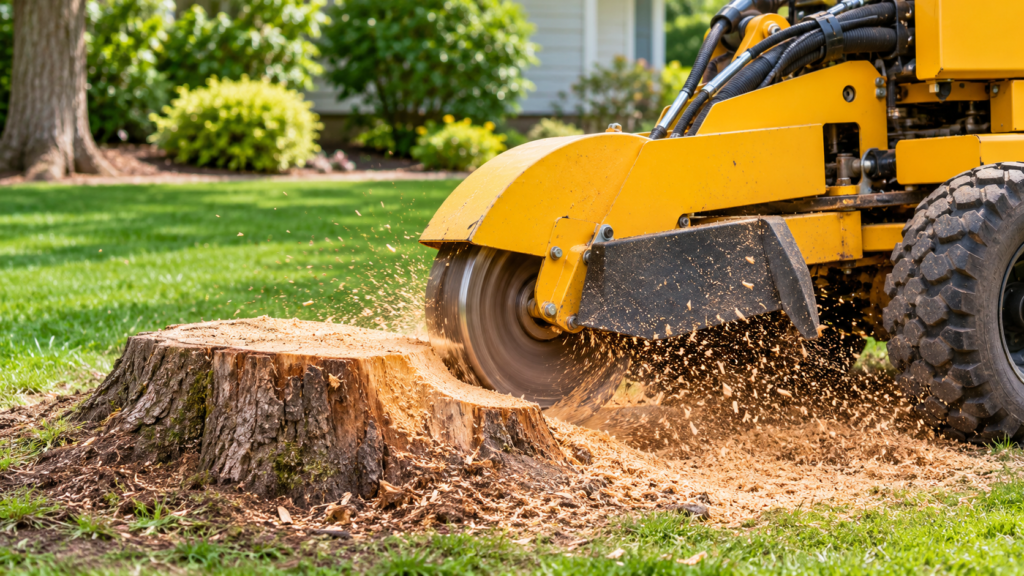
Stump grinding is exactly what it sounds like. A machine with a spinning cutting wheel chews the stump into wood chips, working from the top down to below ground level. The wheel is lined with hardened carbide teeth, and the operator swings it side to side in slow passes until the stump is gone.
Most grinders cut about six to twelve inches below the surface, and larger machines can go deeper when the job calls for it. The machine does not pull the stump out of the ground. It shreds the wood where it sits.
That is why the process is quick, fairly tidy, and much gentler on your lawn than digging. A small stump can be done in under an hour, while a big one with wide roots takes longer.
Why You Should Remove Tree Stumps from Your Property
Many people leave stumps alone for a year or two, and that is a fair choice at first. But stumps cause trouble over time. They are a trip hazard, especially for kids and guests. They make mowing and trimming harder.
A decaying stump can also attract carpenter ants, termites, and other insects that you don’t want near your house or other trees. Some stumps even grow fungus or throw up sprouts for years. Then there’s the plain fact that a stump is ugly, and it blocks you from using that spot for anything else.
If you plan to plant, build a patio, or just level the lawn, tree stump removal moves from “someday” to “now.” Taking care of it early usually costs less than waiting, too, because the wood is still firm and the grinder cuts it cleanly.
Stump Grinding vs. Full Stump Removal: What’s the Difference?
People often use these terms as if they mean the same thing, but they don’t. Grinding shreds the stump and leaves the deeper roots in the ground to rot naturally. Full removal means digging out the stump and as much of the root ball as possible, usually with an excavator or backhoe.
That leaves a large hole and a lot of disturbed soil. For most residential yards, grinding is the better fit. It is faster, causes less damage, and costs less. Full removal makes sense in a few cases, such as when you’re pouring a foundation, putting in a pool, or need every bit of root gone.
If you’re not sure which one you need, a good contractor will walk the site and tell you honestly. We’d rather explain the tradeoffs than sell you a bigger job than your yard needs.
Factors That Affect Stump Grinding Costs
Price depends on a handful of things, and no honest company can quote a number without seeing the stump. Size is the biggest factor, because a thirty-inch stump takes far more time than a ten-inch one. Wood type matters as well. Hardwoods like oak and maple are dense and slow to cut, while softer woods go faster.
Access is another piece. If the grinder can drive straight to the stump, the job is simple. If it has to squeeze through a narrow gate or climb a slope, the work takes longer. The number of stumps counts too, since many crews charge less per stump when there are several in one visit. Exposed roots, rocks buried in the soil, and old stumps with hard, dry wood can add time. Finally, ask whether cleanup and haul-away are included.
Anyone searching for affordable stump grinding Geneseo should compare what each quote covers, not just the bottom line. The cheapest number can end up costing more if cleanup is extra.
The Step-by-Step Stump Grinding Process
Here is how a typical job goes on our end. First, we walk the property and look at the stump, the ground around it, and the route in. Then we check for hazards.
Before any machine touches the ground, we call 811 so underground utilities are marked, which is required in New York and protects your gas, water, electric, and communication lines. Next, we cut the stump down as low as we safely can with a chainsaw, which gives the grinder a cleaner start.
After that, the operator positions the machine and begins grinding, sweeping the wheel across the stump and lowering it a little with each pass. Once the stump is below grade, we grind outward to chase the larger surface roots. Last, we rake the chips into a pile and talk through what you want done with them. Everything wears eye, ear, and face protection, and we keep people and pets well back while the machine runs.
What to Expect After Stump Grinding
This is the part most homeowners don’t hear about ahead of time. When we finish, you’ll see a mound of wood chips and loose soil where the stump used to be. That mound is larger than you might expect, because grinding creates a lot of material. Some of it can be hauled off, and some can stay.
The chips are good for mulch around trees and garden beds, though fresh chips pull a little nitrogen from the soil as they break down, so keep them off your vegetable garden. The spot may sink slightly over the following months as buried roots and chip debris settle and rot.
That’s normal. If you’re wondering what to expect after grinding, think of it as a short cleanup phase rather than a finished lawn. The stump is gone, but the ground needs a little attention before it looks like the rest of your yard.
How to Restore Your Lawn After Stump Grinding
Fixing the spot is simple, and you can do it yourself. Start by shoveling out most of the wood chips, since a thick layer will keep grass from growing. Leave a few inches of the mixed chips and soil if the hole is deep.
Fill the area with good topsoil, mounding it a little higher than the surrounding lawn because it will settle. Tamp it down gently, then spread grass seed that matches your existing lawn. In our area, early fall and early spring are the best times to seed. Cover the seed lightly with straw to hold moisture, and water daily until it sprouts.
Expect to top off the soil once more if it sinks. If you’d rather plant a shrub or small tree in the same spot, wait until the chips and roots have broken down more, or dig out the old material and replace it with fresh soil first.
Managing Root Sprouts After Stump Grinding
Some species refuse to quit. Maples, willows, poplars, black locust, and sumac are known for sending up shoots from roots left in the ground. You may see small green sprouts a few weeks or months after grinding.
They are annoying, but they’re not a sign the job was done wrong. The roots are still alive and trying to feed themselves. The best response is to keep cutting the sprouts back as they appear, which slowly starves the root system.
Mowing over them regularly works in a lawn. For stubborn cases, a licensed applicator can treat fresh cuts with a herbicide made for woody plants, and the label directions matter here, so follow them closely. Be careful near other trees, because roots can be connected underground. Over a season or two, most sprouting fades out on its own.
DIY Stump Grinding vs. Hiring a Professional Service
You can rent a stump grinder from many equipment yards, and plenty of people do. For a single small stump, it can work. But these machines are heavy, the cutting wheel is dangerous, and flying chips and rocks are a real risk. Rental grinders are also less powerful than professional units, so big hardwood stumps can take hours.
You’ll also need to haul the machine, handle the cleanup, and make sure you’ve called 811 beforehand. Add up the rental fee, fuel, protective gear, and your time, and the savings often shrink. Hiring a pro costs more up front, but it brings insurance, experience, and a faster finish.
If someone is injured on your property or a line gets cut, that insurance matters. Many homeowners decide that stump grinding services are worth it for peace of mind alone.
Choosing a Stump Grinding Service in Geneseo, NY
Local knowledge counts more than people think. Our soil, our weather, and our older neighborhoods all affect how a job goes. When you’re comparing companies for stump grinding Geneseo NY, start with a few basic questions. Do they carry liability insurance and workers’ compensation? Ask for proof.
Do they give a written quote after seeing the site? Will they call 811, and will they say plainly what is and isn’t included? Look at their Google Business Profile and read recent reviews, paying attention to how the company responds to complaints. A business with a real local address and a track record in Livingston County is easier to hold accountable than one that only shows up in ads.
Be wary of anyone who pushes you to decide on the spot or quotes a price over the phone without any details. A good contractor is comfortable with questions, and so is Galbraith Tree & Shrub.
Frequently Asked Questions About Stump Grinding
How long does stump grinding take?
Most residential stumps take between thirty minutes and two hours. Size, wood hardness, and exposed roots change the time. Several stumps in one visit take longer, though the setup work only happens once.
How deep does a grinder go?
Typically six to twelve inches below ground level. That’s deep enough for grass or small plants. If you plan to plant a tree or build over the spot, tell your contractor so they can go deeper.
Will the roots keep growing after grinding?
Roots usually die over time once the stump is gone, though some species send up sprouts for a while. Cutting the sprouts back consistently weakens the roots until they stop producing new growth.
Can I plant right after stump grinding?
Grass seed works fine once you’ve added topsoil. For trees or shrubs, wait or replace the soil, because fresh chips and decaying roots can hold back young plants and settle unevenly.
Does grinding damage my lawn?
Some damage is normal. The machine and the chip pile leave bare soil, and tracks from equipment may show. With topsoil, seed, and regular watering, most yards recover within a growing season.
Do I need to be home during the work?
Not always, but it helps for the first visit and final walk-through. We want to confirm which stumps are included and where the chips go. Pets and kids should stay indoors during grinding.
Is stump grinding safe for nearby trees and structures?
Yes, when done carefully. Operators keep a safe distance from foundations, fences, and utilities, and 811 marking prevents line strikes. Roots from nearby trees are left alone unless they’re part of the stump.
Keep Reading
More from the blog
Practical guidance on looking after the trees on your property.
Commercial Tree Service: Protecting Business Properties & Liability
A tree on a business lot looks like scenery until it isn’t. A limb drops onto a delivery van. A root pushes…
Dead Tree Removal Geneseo: When to Remove & Safety Risks
A dead tree rarely announces itself. One summer the maple by the driveway leafs out late, the next it doesn’t leaf out…
Affordable Tree Removal Near Me: Budget Options Without Compromising Safety
When a tree becomes damaged, diseased, unstable, or simply outgrows its space, removing it may be necessary to protect your property. However,…