
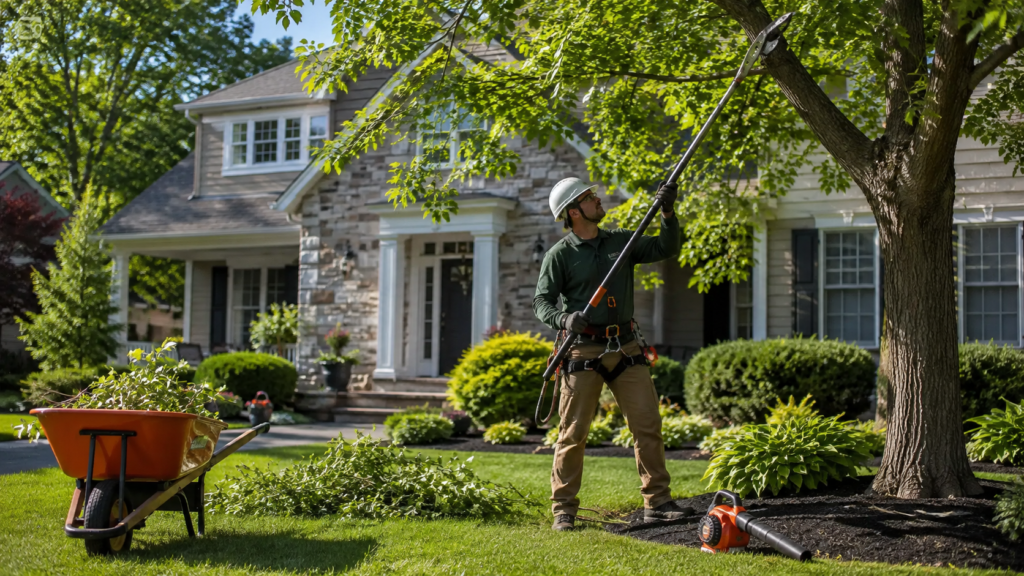
Tree Maintenance Services: The Annual Plan Every Property Owner Needs
A tree doesn’t ask for much until the day it asks for everything.
Most homeowners in Livingston County never think about the maple in the front yard until a limb comes down in a windstorm. By then, the damage is done, and the bill is usually bigger than it needed to be.
Tree maintenance services aren’t about babying a healthy tree.
They’re about catching the small problems before they turn into emergencies. A little attention every year saves a lot of trouble later. This guide walks through what a real maintenance program looks like for Geneseo properties. No fluff, just what actually works.
What a Full Tree Maintenance Program Includes
Tree maintenance services cover more ground than most people expect. It starts with an inspection, walking the property, and looking at every tree that could affect a structure, driveway, or power line.
Then comes pruning, done with a purpose, not just trimming for looks. Soil health gets checked too, because a stressed root system shows up in the canopy months later. Pest and disease monitoring rounds it out, since Western New York has its share of threats to watch for.
Add in storm damage prevention work like cabling and deadwood removal, and you’ve got the full picture. None of this is a one-time fix. It’s a rhythm you keep up year after year.
Why Annual Inspections Prevent Costly Emergencies
An inspection costs a fraction of what an emergency removal does. An arborist walking your property once a year can spot a cracked limb, a hollow trunk, or root rot long before it becomes a hazard.
Trees don’t fail overnight, usually.
The warning signs build for months, sometimes years, and most homeowners just don’t know what to look for. A tree health assessment that Geneseo property owners get through an annual visit catches those signs early.
That’s the difference between a small pruning bill and a multi-thousand-dollar emergency removal after a storm. Insurance companies know this, too. Some will ask for proof of regular tree care before they’ll cover storm damage claims.
Seasonal Calendar: What To Do Each Season
Trees don’t operate on a single schedule; they shift with the seasons. Late winter is prime time for structural pruning, since the tree is dormant and you can see its shape clearly without leaves in the way.
Spring is when you watch for pest activity, waking up and checking for winter damage that didn’t show until the buds came in. Summer calls for monitoring canopy health, watching leaf color, and keeping an eye out for signs of drought stress during dry stretches.
Fall is the season for cabling and bracing work, plus removing deadwood before ice and snow put extra weight on branches.
Winter itself is often the best time for larger removals, since frozen ground protects the lawn and landscaping underneath. Skipping a season doesn’t ruin everything. But it does let small problems sit longer than they should.
Tree Disease and Pest Monitoring in Western NY
This region has a specific set of threats that every property owner should know about.
Emerald ash borer has already wiped out a huge share of the ash trees across Livingston County, and any ash still standing needs regular monitoring or treatment.
Oak wilt shows up here too, spreading fast through root systems and requiring quick action once it’s spotted.
Anthracnose and other fungal issues tend to hit maples and sycamores hard during wet springs.
Bagworms and gypsy moth caterpillars can defoliate a tree in a matter of weeks if nobody catches the early signs.
Preventive tree care, which NY property owners rely on, usually includes seasonal scouting for exactly these problems. Catching an infestation in year one is manageable. Catching it in year three often means losing the tree.
Crown Thinning, Deadwood Removal & Cabling
These three jobs do most of the heavy lifting in a maintenance plan.
Crown thinning opens up the canopy so wind passes through instead of catching the whole tree like a sail.
Deadwood removal takes out the branches that are already dead or dying, which is where storm damage almost always starts.
Cabling supports weak unions between major limbs, the spots most likely to split apart under ice or heavy wind.
A trained arborist knows how much to remove and how much to leave, since over-pruning stresses a tree just as much as neglect does.
This is where hiring an expert arborist in Geneseo, NY, actually matters to property owners, because bad pruning cuts can shorten a tree’s life by years. It’s technical work. Not something to hand off to just any tree trimming company that shows up with a chainsaw.
How Galbraith’s Maintenance Plans are Structured
Galbraith Tree & Shrub built its maintenance plans around what actually happens to trees in this climate, not a generic checklist.
Every plan starts with a walkthrough of the property and a written assessment of each tree, noting species, condition, and any red flags. From there, a schedule gets built around the seasonal calendar above, timed to the specific trees on the lot.
Commercial tree service clients get an added layer, since liability and foot traffic change the priorities on a business property. Pricing is based on the number and size of trees, not a flat fee that doesn’t match the actual workload. Every visit gets documented, so there’s a record if a warranty or insurance question ever comes up.
Some properties need two visits a year. Others need four, depending on tree count and species mix.
ROI: How Maintenance Adds Property Value
Healthy, well-kept trees add real dollar value to a property, and that’s not a guess.
Appraisers and real estate agents both factor mature tree canopy into home values, sometimes adding thousands to a sale price. A tree that’s been maintained looks better in photos, stands up better in storms, and costs less to insure over time.
Removal costs for a large, neglected tree can run into the thousands, money that a smaller annual maintenance budget would have avoided entirely. Curb appeal matters at resale, and a yard with strong, well-shaped trees reads as cared-for to a buyer walking up the driveway.
Commercial properties see it too, since customers respond to a well-maintained exterior even if they can’t say exactly why. Maintenance isn’t an expense that disappears. It’s an investment that shows up on the property line.
If you own property in Geneseo or anywhere in Livingston County, a maintenance plan is worth setting up before storm season, not after. Galbraith Tree & Shrub offers property walkthroughs to help owners figure out where to start and what their trees actually need.
Frequently Asked Questions
How often should trees be inspected on a residential property?
Most residential properties benefit from one full inspection each year, ideally in late winter or early spring. Properties with older trees, storm history, or species like ash may need two visits, once in spring and again in fall, to catch seasonal changes.
What’s included in a tree health assessment?
A tree health assessment performed by arborists looks at trunk condition, root flare, canopy density, and signs of pest or disease activity. The arborist documents findings and flags any tree that needs pruning, cabling, or removal before it becomes a hazard.
How much does tree maintenance cost per year?
Costs vary by property size, tree count, and species mix, but most residential plans run a few hundred dollars annually. Commercial tree service contracts cost more due to liability coverage and visit frequency, though pricing is always based on actual workload.
Can maintenance really prevent storm damage?
Maintenance can’t stop a storm from happening, but it removes the weak points most likely to fail. Deadwood, cracked limbs, and poor branch unions are the usual culprits in storm damage, and all three get addressed during routine tree maintenance services.
What time of year is best for pruning?
Late winter, while trees are dormant, is generally the best window for structural pruning. It’s easier to see the branch structure without leaves, and cuts heal faster once spring growth starts. Some corrective pruning can happen in other seasons if there’s an urgent issue.
How do I know if my tree has a disease or pest problem?
Watch for early leaf drop, discolored or wilting foliage, bark that’s peeling unexpectedly, or small holes in the trunk. Preventive tree care for NY property owners schedules catch most of these issues during routine visits, often before symptoms are visible.
How do I get started with a maintenance plan?
Call Galbraith Tree & Shrub for a property walkthrough. An arborist will look at your trees, note any concerns, and put together a schedule that fits your property instead of a generic package that doesn’t match what you actually have growing.
Most residential properties benefit from one full inspection each year, ideally in late winter or early spring. Properties with older trees, storm history, or species like ash may need two visits, once in spring and again in fall, to catch seasonal changes.
A tree health assessment performed by arborists looks at trunk condition, root flare, canopy density, and signs of pest or disease activity. The arborist documents findings and flags any tree that needs pruning, cabling, or removal before it becomes a hazard.
Costs vary by property size, tree count, and species mix, but most residential plans run a few hundred dollars annually. Commercial tree service contracts cost more due to liability coverage and visit frequency, though pricing is always based on actual workload.
Maintenance can’t stop a storm from happening, but it removes the weak points most likely to fail. Deadwood, cracked limbs, and poor branch unions are the usual culprits in storm damage, and all three get addressed during routine tree maintenance services.
Late winter, while trees are dormant, is generally the best window for structural pruning. It’s easier to see the branch structure without leaves, and cuts heal faster once spring growth starts. Some corrective pruning can happen in other seasons if there’s an urgent issue.
Watch for early leaf drop, discolored or wilting foliage, bark that’s peeling unexpectedly, or small holes in the trunk. Preventive tree care for NY property owners schedules catch most of these issues during routine visits, often before symptoms are visible.
Call Galbraith Tree & Shrub for a property walkthrough. An arborist will look at your trees, note any concerns, and put together a schedule that fits your property instead of a generic package that doesn’t match what you actually have growing.
Keep Reading
More from the blog
Practical guidance on looking after the trees on your property.
Emergency Tree Removal: What to Do Right Now (Action Guide)
A tree doesn’t ask permission before it comes down. One minute it’s just another maple in the yard, and the next it’s…
Tree Removal Cost Guide 2026: What You’ll Actually Pay
Every fall, we get the same call. A homeowner in South Buffalo or Amherst looks at a leaning silver maple and asks,…
Affordable Tree Service in Geneseo, NY: Quality Care That Fits Your Budget
Twenty-some years of cutting, climbing, and grinding stumps in this county, and I still hear the same question first. “What’s this going…